guides
What Is a Cold Plunge? Benefits, Protocol and How to Start
Cold plunge explained: what it is, how it works, proven benefits, target temperature, session length, and how to start safely at home.
 Marcus Reade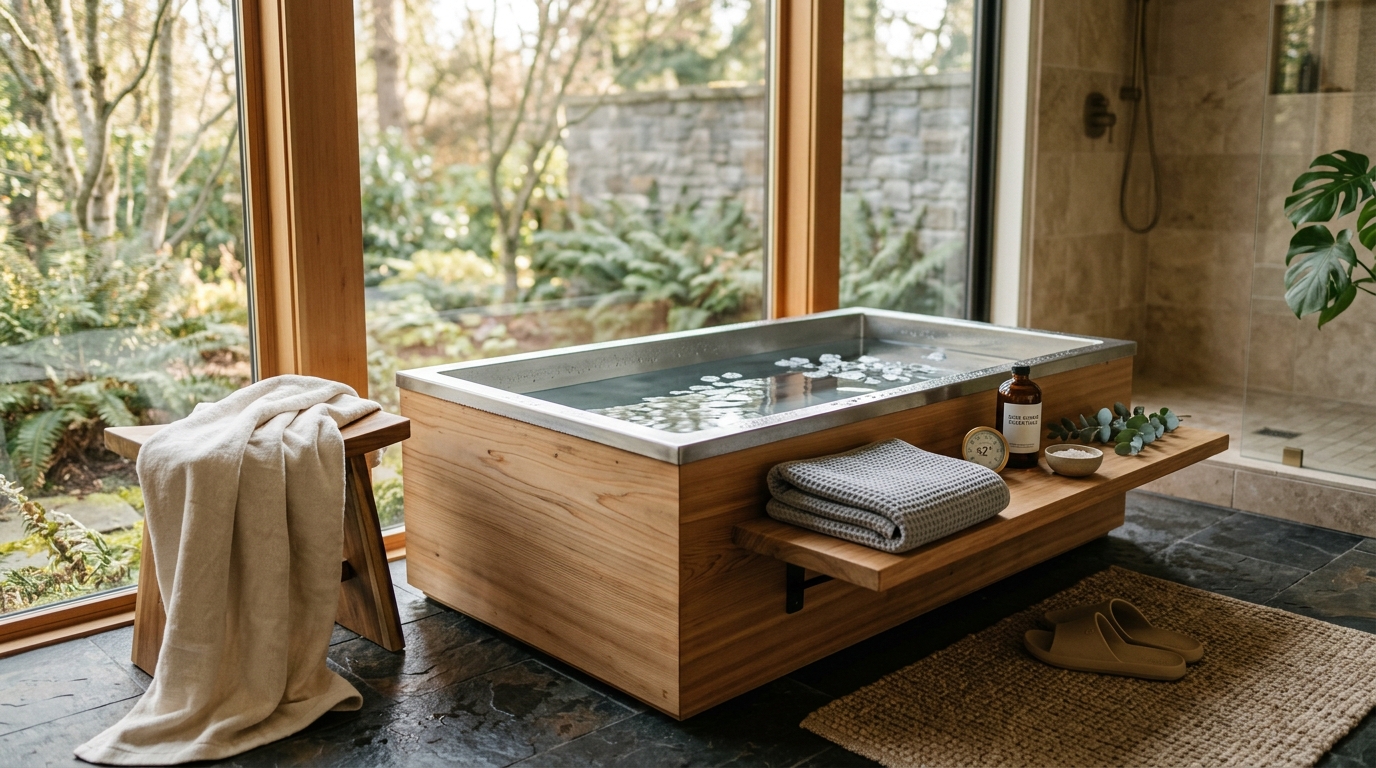
A cold plunge is deliberate immersion of the body in cold water — typically 50–59°F (10–15°C) — for 2–5 minutes per session. The controlled cold stress triggers norepinephrine and dopamine release, vasoconstriction, and reduced systemic inflammation. Vessels range from a $30 stock tank filled with ice to a $5,000 dedicated chiller tub, and the core physiological response is essentially identical across all formats.
What is a cold plunge?
A cold plunge — also called cold water immersion (CWI) or cold hydrotherapy — is a deliberate practice of submerging the body in cold water for a short, controlled period. It is distinct from accidentally jumping into a cold lake. The defining elements are controlled temperature (50–59°F), controlled duration (2–5 minutes), and regular repetition (2–4 sessions per week).
Cold water immersion has been used in athletic recovery for decades. Scandinavian cultures have practiced alternating between hot saunas and cold water or snow for centuries. What changed recently is the mechanistic research explaining why it works, and the mainstream adoption of dedicated home setups — from chest freezer conversions to purpose-built stainless-steel tubs with chillers — making regular cold plunge practice accessible outside elite sports facilities.
The term “cold plunge” loosely refers to both the practice itself and the vessel used for it. When someone says they are buying a cold plunge, they typically mean a tub or tank designed for regular cold water immersion, usually paired with a mechanical chiller unit that maintains temperature without requiring ice.
A cold plunge is not the same as a cryotherapy chamber. Whole-body cryotherapy uses extremely cold air (minus 200°F or lower) for very short exposures (2–3 minutes). Cold water immersion is physiologically distinct: water conducts heat away from the body approximately 25 times faster than air at the same temperature, producing a more intense and therapeutically well-documented response at 50–59°F than cryotherapy chambers achieve at far colder air temperatures.
How does cold plunging work?
When the body enters cold water below 60°F, a rapid cascade of physiological responses begins within seconds:
Cold shock response. The initial immersion triggers a gasp reflex, elevated heart rate, and a sharp rise in blood pressure. This response diminishes with repeated exposures as the body adapts — a core part of building cold tolerance over weeks of consistent practice. Controlled breathing before and during entry is the primary skill that manages this response.
Vasoconstriction. Blood vessels near the skin surface constrict sharply, redirecting blood flow to the core and vital organs. This is the mechanism behind the characteristic numbness and tingling in the extremities. On exit, blood floods back into peripheral tissues — a rebound vasodilation that contributes to the post-plunge warmth and energy surge.
Norepinephrine surge. Research published in the European Journal of Applied Physiology documents norepinephrine increases of 200–300% above baseline during cold water immersion. Norepinephrine drives alertness, focus, and mood elevation. The rise begins within minutes of immersion and peaks during or shortly after the session.
Dopamine rise. A sustained dopamine increase — separate from the norepinephrine spike — follows the session. Unlike the brief reward signal from food or screens, the cold-plunge dopamine rise is gradual and lasts several hours, producing a calm, sustained elevation in motivation and well-being that many practitioners describe as their primary reason for continuing the practice.
Reduced inflammation. Cold immersion reduces circulating levels of pro-inflammatory cytokines and creatine kinase in the hours following a session. This is the primary mechanism behind faster muscle recovery: less secondary inflammation means less soreness and a shorter return-to-training window after hard exercise.
Brown adipose tissue activation. Cold exposure activates brown adipose tissue (BAT), a metabolically active fat that burns calories to generate heat. Regular cold exposure increases BAT density and mitochondrial efficiency. The caloric effect of a single session is modest, but the long-term metabolic adaptation from consistent cold exposure is real.
What are the benefits of cold plunging?
The most well-supported benefits of regular cold water immersion, grounded in published research:
Reduced muscle soreness and faster recovery. A 2022 meta-analysis in Sports Medicine found cold water immersion at 50–59°F for 10–15 minutes per week consistently reduced delayed-onset muscle soreness and accelerated perceived recovery in recreational athletes. This is the evidence base elite athletic programs have relied on for years.
Mood and mental alertness. The norepinephrine and dopamine effects produce measurable improvements in mood and cognitive alertness in the hours following a cold plunge. Many regular practitioners report reduced anxiety and improved ability to handle daily stress over time — attributed to repeated adaptation of the autonomic stress-response system.
Cardiovascular adaptation. Repeated cold immersion trains the vascular system to constrict and dilate rapidly and efficiently, improving vascular tone over time. This is similar to the cardiovascular training effect of interval exercise — acute stress followed by recovery drives favorable long-term adaptation.
Cold tolerance and mental resilience. Learning to control breathing, slow heart rate, and remain calm in a physiologically stressful situation builds genuine stress-tolerance capacity. Research in autonomic nervous system function supports this: repeated cold stress followed by controlled recovery measurably reduces the acute stress response to subsequent cold exposures, and this adaptation appears to transfer to other stressors.
Metabolic support. Brown adipose tissue activation from regular cold exposure increases basal metabolic rate modestly and improves insulin sensitivity in some populations. Not a weight-loss tool on its own, but a real metabolic benefit that complements diet and exercise.
Sleep quality. The body temperature regulation triggered by cold exposure — cooling, then rewarming — mirrors the thermoregulatory pattern that promotes deep sleep onset. Many practitioners report improved sleep quality from evening cold plunge sessions, similar to the sleep benefit from post-workout temperature regulation.
What temperature should a cold plunge be?
The target range for effective cold water immersion is 50–59°F (10–15°C). Most evidence-based protocols, including those referenced by sports medicine researchers and practitioners like Dr. Susanna Søberg and Andrew Huberman, use water at or below 60°F.
Below 59°F, the key physiological responses — norepinephrine surge, vasoconstriction, cold adaptation — activate reliably. Below 45°F, cold shock risk increases significantly without meaningful additional recovery or hormonal benefit for most users. The 50–55°F range is the practical sweet spot: genuinely challenging, fully effective, and tolerable enough to stay in for 3–5 minutes with proper breathing technique.
For beginners: start at 60°F and work down to 55°F over the first two weeks. The cold shock response at 60°F is real but manageable. Dropping immediately to 50°F before the body has adapted makes sessions aversive rather than beneficial and often causes people to quit the practice before adaptation occurs.
Seasonal outdoor setups: water in a stock tank or outdoor tub in cool climates may naturally sit at 45–55°F in winter without any chilling. Be cautious about water that is colder than your target without realizing it. Use a waterproof thermometer to verify temperature before entering.
For a complete breakdown of temperature tiers by goal — recovery, metabolic activation, and cold adaptation — see our cold plunge temperature guide.
How long should you stay in a cold plunge?
Two minutes is the minimum effective session length — enough time for meaningful vasoconstriction and the initial norepinephrine release. Most practitioners build to 3–5 minutes per session over the first few weeks. Evidence-based protocols suggest 11–15 minutes of total weekly cold immersion spread across 2–4 sessions. Sessions longer than 10–12 minutes produce diminishing physiological returns for most people and increase cold stress risk without proportional benefit.
The beginner progression: start at 2 minutes per session for the first week. Add 30–60 seconds per week until you reach 5 minutes comfortably. Do not chase longer sessions in the first month — frequency and consistency matter far more than duration. Two consistent 3-minute sessions per week beat one occasional 10-minute session in terms of measurable adaptation.
The exit protocol matters. After exiting, shivering is beneficial — it drives an additional dopamine and norepinephrine rebound. Resist jumping immediately into a hot shower. Sit with the cold sensation for 5–10 minutes, let your body rewarm naturally, and let the hormonal response fully develop. The 20–30 minutes following a cold plunge are often when cognitive clarity and mood elevation peak.
Types of cold plunge setups
Every cold plunge setup falls into one of four categories:
| Product | Best for | Rating | Notes | |
|---|---|---|---|---|
| Ice bath (stock tank or bathtub) | Beginners testing the practice before committing to a dedicated setup | ★★★★☆ | Upfront cost $30-150. Requires 40-200 lbs of ice per session. Temperature drops as ice melts through the session. | — |
| Insulated inflatable vessel | Renters and occasional users who want portability and easier storage | ★★★★☆ | Cost $80-300. Insulated walls reduce ice needed. Folds flat for storage. No GFCI requirement. | — |
| Chest freezer conversion | DIY-inclined users who want precise automatic temperature control at low cost | ★★★★☆ | Cost $200-400 used. Cools to 39°F automatically. Requires GFCI outlet and water sanitizer. | — |
| Dedicated cold plunge tub with chiller | Daily users who want zero-prep convenience and automatic temperature maintenance | ★★★★★ | Cost $500-5,000+. Always ready at target temperature. Built-in filtration on premium models. | — |
For a detailed cost comparison of ice baths versus chiller tubs — including break-even calculations by session frequency — see cold plunge vs ice bath. For ranked product picks across all price tiers, see our best cold plunge tubs roundup.
How to start cold plunging at home: a 4-week protocol
Week 1 — 60°F, 2 minutes, 2 sessions per week
Set water to 60°F. Enter slowly. Take slow, controlled breaths before and during immersion — exhale deliberately to manage the gasp reflex. Stay for 2 minutes. Exit and rewarm naturally without a hot shower for at least 5 minutes.
Week 2 — 58°F, 3 minutes, 2–3 sessions per week
Drop temperature 2°F and add one minute to each session. Focus on your breathing. The cold shock response is already diminishing as your body adapts — sessions feel less chaotic than week one.
Week 3 — 55°F, 4 minutes, 3 sessions per week
You are in the evidence-based target range. Maintain slow, nasal breathing throughout. If you find yourself able to relax into the water during the second or third minute, that is cold adaptation working correctly.
Week 4 and beyond — 52–55°F, 4–5 minutes, 3–4 sessions per week
Maintain this protocol. Most experienced practitioners settle at 52–55°F for 4–5 minutes, 3–4 sessions per week, and report consistent benefits in recovery, mood, and stress tolerance at this maintenance level.
Product picks for starting a cold plunge practice
Best for beginners who want a dedicated vessel without committing to a chiller system
Polar Recovery Inflatable Cold Plunge Ice Bath Tub
An insulated inflatable vessel beats a stock tank on two points: it holds temperature longer (reducing ice needed per session) and gives a comfortable seated position rather than crouching in a livestock tank. Most inflate in under five minutes, hold 80-105 gallons, and fold flat for storage. Add 40-50 lbs of ice and you reach 55°F in roughly 20 minutes. The right starting point before you decide whether a chiller is worth the investment.
★★★★☆ 4.3 · 2,100 reviews
Check current price on Amazon→Best for daily plungers who want automatic temperature control and always-ready convenience
Cold Plunge Tub with Chiller and Filtration System
Once cold plunging fits your routine at 3 or more sessions per week, a dedicated tub with chiller eliminates all friction. Set your target temperature once and the chiller maintains it continuously. No ice to buy, no prep time, water that stays genuinely clean for weeks with built-in filtration. The consistent finding among high-frequency plungers is that a chiller drives significantly higher adherence than ice setups — and adherence is where the actual long-term benefits accumulate.
★★★★★ 4.6 · 810 reviews
Check current price on Amazon→Is cold plunging safe?
Cold water immersion is safe for most healthy adults, but several conditions require medical clearance or avoidance:
- Cardiovascular disease or history of heart attack: the sudden vasoconstriction and heart rate spike are contraindicated without explicit cardiologist clearance.
- Raynaud syndrome: cold-triggered vasospasm is significantly worsened by cold water immersion.
- Pregnancy: not recommended without OB clearance.
- Uncontrolled hypertension: blood pressure spikes sharply in the first 30–60 seconds of immersion.
- Open wounds or active skin infections: cold water immersion increases infection risk.
Always use a GFCI outlet for any electrically powered cold plunge setup (chest freezer conversion, chiller unit). Water and electricity without a ground fault interrupter is a genuine electrocution hazard.
Never plunge alone when new to cold therapy. Cold shock can cause involuntary gasping and brief disorientation. Have someone nearby for the first several sessions until you have established your controlled breathing response reliably.
Build temperature down gradually rather than starting at 50°F. The adaptation process takes 2–3 weeks; trying to accelerate it with extreme cold from day one is how most people quit.
FAQ
Frequently asked questions
What is the difference between a cold plunge and an ice bath?
How cold does a cold plunge need to be to work?
How long should a cold plunge session last?
What does a cold plunge do for muscle recovery?
Is a cold plunge better before or after a workout?
Do you need an expensive setup to get the benefits of cold plunging?
Bottom line
A cold plunge is deliberate cold water immersion — a simple, evidence-backed practice with a low barrier to entry. You do not need an expensive chiller tub to begin. An inflatable vessel and bags of ice at 55–59°F for 2–3 minutes, twice a week, is enough to experience the recovery, mood, and adaptation benefits and learn whether the practice fits your life.
If you find yourself plunging consistently 3 or more times per week, a dedicated chiller tub pays for itself in avoided ice costs and dramatically improved convenience within 18–24 months. The consistent finding across experienced practitioners is that a chiller tub gets used far more often than an ice setup — and consistency is where the benefits actually accumulate.
Start at 60°F for 2 minutes. Drop temperature and add time gradually over the first month. Build the habit before optimizing the hardware.
For top-rated cold plunge setups across all budgets, see our best cold plunge tubs roundup. To build your own setup at minimal cost, read our how to build an outdoor cold plunge guide. To pair cold therapy with sauna heat for maximum recovery, read our contrast therapy guide and explore best home saunas for compatible setups.