guides
Sauna Session Guide for Beginners
Everything a beginner needs for their first sauna session: prep steps, right temperature, how long to stay, and how to structure rounds safely.
 Marcus Reade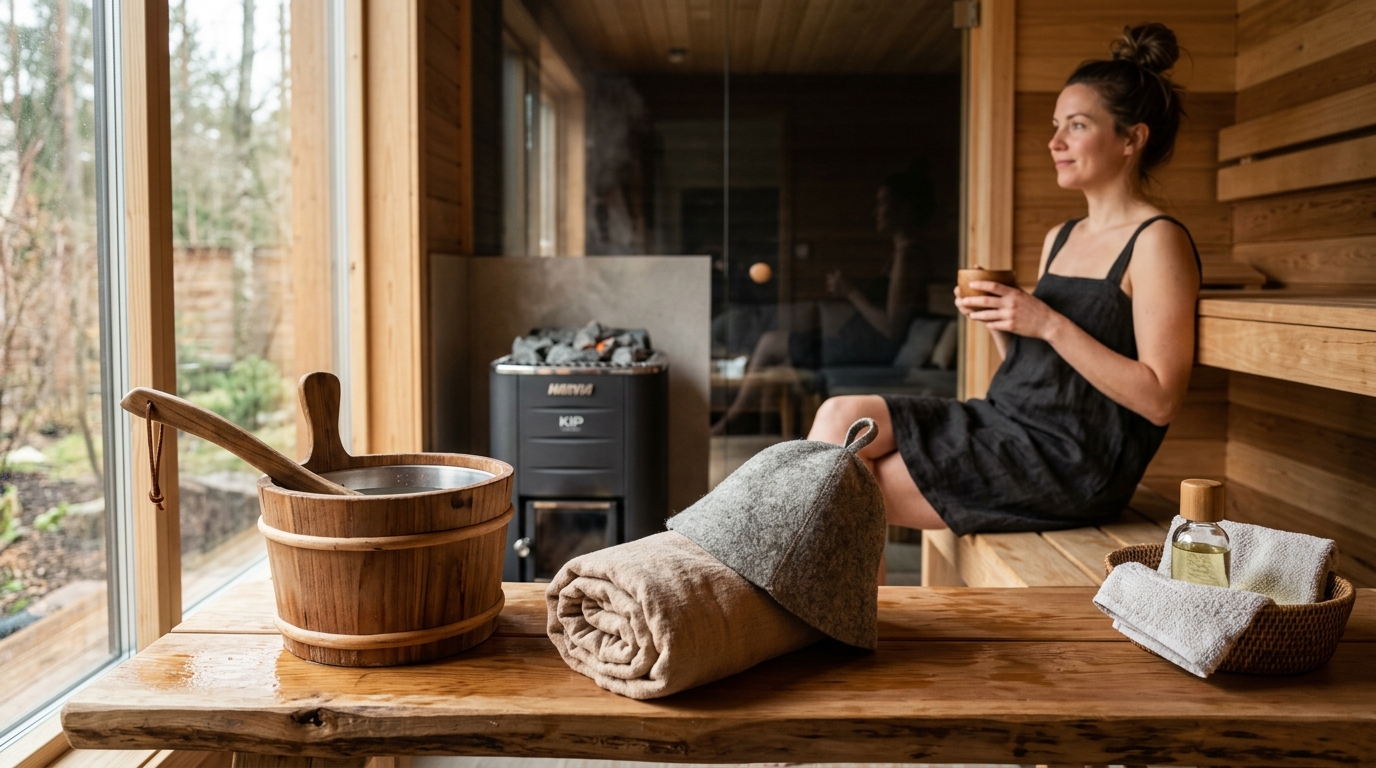
For your first sauna session, aim for 8–10 minutes at 150–160°F on the lower bench, drink 16 oz of water beforehand, then cool down with a cold shower for 30–60 seconds. One or two rounds is plenty. The goal is to finish feeling relaxed, not exhausted — intensity and duration are easy to increase across later sessions.
What to expect your first time in a sauna
Most first-timers underestimate two things: how quickly the heat builds and how different the upper bench feels from the lower bench. A traditional Finnish sauna running at 175°F at the ceiling may be only 155°F at lower-bench height — that gap matters enormously for how comfortable your first session feels.
The first 3–4 minutes in a hot sauna feel intense. Your skin temperature rises fast, and your body begins redirecting blood flow to the surface to dissipate heat. By minute 5–7, most people settle into the warmth and begin to feel their muscles loosen. By minute 10, a healthy beginner is sweating freely and feeling deeply relaxed.
That 10-minute window is your target for round one. Do not try to stay longer just because the timer has not alarmed — and do not stay longer because someone else in the sauna is still sitting there. Everyone’s heat tolerance is different. Leaving at 9 minutes because that is genuinely enough is a better session than forcing 20 minutes while uncomfortable.
After round one, cool down, rest, and hydrate. Then decide whether to do a second round. Many first-timers are surprised to find that two rounds feels completely satisfying — not that they needed more.
How to prepare for your first sauna session
Preparation in the 30–60 minutes before you enter matters as much as the session itself.
- Hydrate early. Drink 16–24 oz of water in the 30–60 minutes before your session. Plain water, not a sports drink. Avoid caffeine and alcohol for at least two hours before; both are diuretics that accelerate dehydration during the session.
- Eat light. Skip large meals for at least 60–90 minutes before entering. Digestion draws blood flow away from your muscles and skin, which competes with your body’s heat-regulation response. A full stomach in 175°F heat is deeply uncomfortable.
- Shower beforehand. A quick rinse removes lotion, sunscreen, and deodorant that reduce sweat efficiency and affect other bathers in public settings. Cold or warm water — this is a brief rinse, not a full shower.
- Bring a towel. Always sit on a towel, never directly on the bench. This is the universal rule in every sauna worldwide — it is basic hygiene and it protects the wood.
- Leave your phone outside. Most smartphones are rated to 113°F maximum. A traditional sauna runs well above that. Even if the device survives, looking at a screen in the heat is counterproductive to what you came for.
Best for timing rounds accurately without bringing a phone into the heat
Sauna Sand Timer (15-Minute, Birchwood)
A 15-minute sand timer is the traditional way to track sauna rounds and works perfectly for beginners who want to know when 10 minutes is up without checking a phone. Birchwood framing handles repeated thermal cycling without warping or cracking. Simple, reliable, and keeps the phone where it belongs — outside the door.
★★★★★ 4.6 · 840 reviews
Check current price on Amazon→Step-by-step: your first sauna session
Follow this sequence for your first two or three sessions. Once you know how your body responds to the heat, you can adjust timing and temperature to match your goals.
Before you enter:
- Drink 16–24 oz of water in the 30–60 minutes before your session.
- Take a brief rinse shower.
- Gather your towel and, if useful, a small water bottle for the cool-down.
Round 1 (8–10 minutes):
- Enter the sauna and sit on the lower bench.
- Lay your towel beneath you — never sit directly on the wood.
- Breathe slowly through your nose. The air feels intensely hot at first; this sensation settles after 2–3 minutes as your body adjusts.
- After 5 minutes, reassess: if you feel comfortable, stay to 8–10 minutes. If you feel lightheaded, dizzy, or the heat feels genuinely oppressive, exit now — that is not a failure, it is good body awareness.
- Exit the sauna at 8–10 minutes, before you feel you must.
Cool-down (5–10 minutes):
- Take a cold shower for 30–60 seconds, or stand outside in fresh air if the temperature is below 60°F.
- Rest seated for 5 minutes. Drink 8–12 oz of water.
Round 2 (optional, 10–12 minutes):
- Return for a second round only if you feel good after cooling down. You can try the upper bench this round if you want more heat intensity. Stay 10–12 minutes maximum.
- Cool down again with cold water and rest.
After your session:
- Rehydrate with 16–24 oz of water plus electrolytes if you completed two rounds.
- Rest for 10–15 minutes before driving — post-sauna hypotension (temporarily lower blood pressure) is normal and can cause lightheadedness when standing up too quickly.
Choosing the right sauna type and temperature as a beginner
Different sauna types run very different temperature ranges. Starting at the wrong temperature is the most common reason first-timers have a negative experience and do not return.
| Product | Best for | Rating | Notes | |
|---|---|---|---|---|
| Traditional Finnish sauna | authentic experience; deepest sweat | ★★★★★ | 150-195°F. Start at 150-160°F and sit on the lower bench. Classic löyly steam option. | — |
| Far-infrared sauna cabin | beginners; lower air temperature; joint comfort | ★★★★★ | 120-140°F. Less intense on the lungs. Body heats via radiant energy rather than hot air. | — |
| Barrel sauna (outdoor) | traditional heat in a compact home form | ★★★★★ | Same protocol as Finnish. Heats in 30-45 min. Great entry point for home ownership. | — |
| Infrared sauna blanket | apartment use; entry-level at home | ★★★★☆ | 110-140°F. Lie inside for 30-45 min. Low barrier to entry but less social. | — |
| Steam room | respiratory benefits; highest perceived humidity | ★★★★☆ | 110-120°F at 100% humidity. Feels as intense as a 170°F dry sauna despite lower temperatures. | — |
If the sauna you have access to is a traditional Finnish-style room at 170–185°F, start on the lower bench for your first session. If that still feels too intense, try an infrared cabin for your first few sessions and work up to traditional sauna temperatures over 4–6 weeks. There is no benefit to forcing yourself through a session that feels genuinely terrible — the health benefits of sauna come from regular use over months and years, not from one endurance session.
What beginners get wrong
Understanding the most common beginner mistakes prevents the bad experiences that cause people to give up on sauna before experiencing its real benefits.
Staying too long on the first session
Round one should end at 8–10 minutes. Many first-timers push to 20 minutes because they feel fine at 12 and assume the time limit is arbitrary. The problem: signs of overheating — dizziness, nausea, racing heart — can onset quickly and unexpectedly in the final minutes, especially if you are even mildly dehydrated going in. A conservative first session is always the better choice.
Skipping the cool-down
The cool-down is not a break between rounds — it is a core part of the physiological benefit. The contrast between intense heat and cold exposure drives an endorphin release, trains the autonomic nervous system, and is where a significant portion of the cardiovascular adaptation from sauna actually occurs. Beginners who skip the cool-down are getting roughly half the benefit.
Not drinking enough water before entering
Thirst is a lagging indicator of dehydration. By the time you feel thirsty inside a sauna, you are already mildly dehydrated — and that compounds rapidly in the heat. Drink 16–24 oz of water in the 30–60 minutes before entering, not when you are already inside.
Going straight to the top bench
The upper bench of a traditional sauna is 20–30°F hotter than the lower bench at the same room position. This is not a small difference — at sauna temperatures, it is the difference between a manageable introduction to heat and an overwhelming one. Always start on the lower bench for the first 5 minutes, or for your entire first session.
Consuming alcohol before the session
Alcohol impairs the thermoregulatory feedback that tells you to exit when your core temperature climbs too high. It also dramatically increases the rate of dehydration. The combination of alcohol and sauna has caused documented fatalities in both Finnish and US health data. Save the post-sauna cold drink for after you have cooled down completely and rehydrated.
What to wear in a sauna as a beginner
In the US, a swimsuit or a wrapped cotton towel is the standard in gym and spa saunas — either is appropriate. What to avoid:
- Synthetic workout clothes (polyester, spandex) — they trap heat against your skin and do not breathe in high-temperature environments.
- Underwire or metal clasps — metal conducts heat rapidly and can cause burns against skin at 170–185°F.
- Jewelry — rings, bracelets, and earrings heat quickly; remove them before entering.
For a home sauna, clothing choices are your own to set. Most experienced users prefer minimal coverage — a small wrapped towel — to maximize skin exposure and sweat efficiency.
Best for sitting on the bench and wrapping during the cool-down between rounds
Turkish Cotton Sauna Towel Set (35x70 inch)
A large Turkish cotton towel serves as both your bench cover and your wrap for cooling down between rounds. Turkish cotton wicks sweat faster than terrycloth and dries in roughly half the time, so you are not wrestling with a soaked cloth between rounds. Buy two per person — one for sitting, one for drying off during the cool-down phase.
★★★★★ 4.5 · 1,320 reviews
Check current price on Amazon→What to do after your sauna session
The 15–30 minutes following your last cool-down round are when post-sauna benefits are most pronounced.
- Rehydrate fully. After two rounds, you have lost 0.5–1 lb of water weight in sweat. Drink 16–24 oz of water plus an electrolyte supplement, especially if you plan to exercise later or it is warm outside.
- Rest before moving on. Post-sauna blood pressure is temporarily lower than normal. Standing up quickly or heading into vigorous activity within 10 minutes of finishing can cause lightheadedness. Sit for 10–15 minutes.
- Eat a light meal if hungry. A moderate meal or snack 20–30 minutes post-sauna restores energy without competing with the recovery state your body has entered.
- Expect better sleep. Evening sauna sessions reliably improve sleep quality. The body temperature drop that follows the cooling phase triggers deeper slow-wave sleep stages — one of the most consistently reported and appreciated effects among regular sauna users.
Best for rehydrating after a 2-3 round sauna session when plain water is not enough
Electrolyte Powder Packets (Variety Pack)
After two sauna rounds, you have lost sodium, potassium, and magnesium alongside the water weight. Plain water replaces the fluid but not the minerals. A single-serving packet mixed into 16 oz of water handles both. Keep a small supply at your sauna setup for the post-session routine — the difference in how you feel afterward is noticeable compared to water alone.
★★★★★ 4.7 · 3,400 reviews
Check current price on Amazon→FAQ
Frequently asked questions
How long should a beginner stay in a sauna?
What temperature should a beginner start at in a sauna?
Should you shower before or after a sauna?
Is it normal to feel dizzy after a sauna?
How soon can a beginner use a sauna again?
Do saunas burn calories or help with weight loss?
Bottom line
Your first sauna session should end with you feeling deeply relaxed, not depleted. Eight to ten minutes on the lower bench, one cold shower cool-down, and a second round if you feel ready — that is a complete beginner session. Build toward longer sessions and higher bench positions over the first 4–6 weeks and you will have solid heat tolerance and a consistent routine within a month or two.
For the full step-by-step protocol and accessory recommendations, see how to use a sauna. For what regular practice actually does for your body, read home sauna benefits and sauna benefits for recovery. For detailed hydration guidance, see the sauna hydration guide. For shared-facility behavior, see the sauna etiquette guide.