guides
How to Use a Sauna: Step-by-Step Beginner Guide
How to use a sauna safely: temperature settings, timing per round, hydration, cool-down, and post-session routine. Complete beginner guide.
 Marcus Reade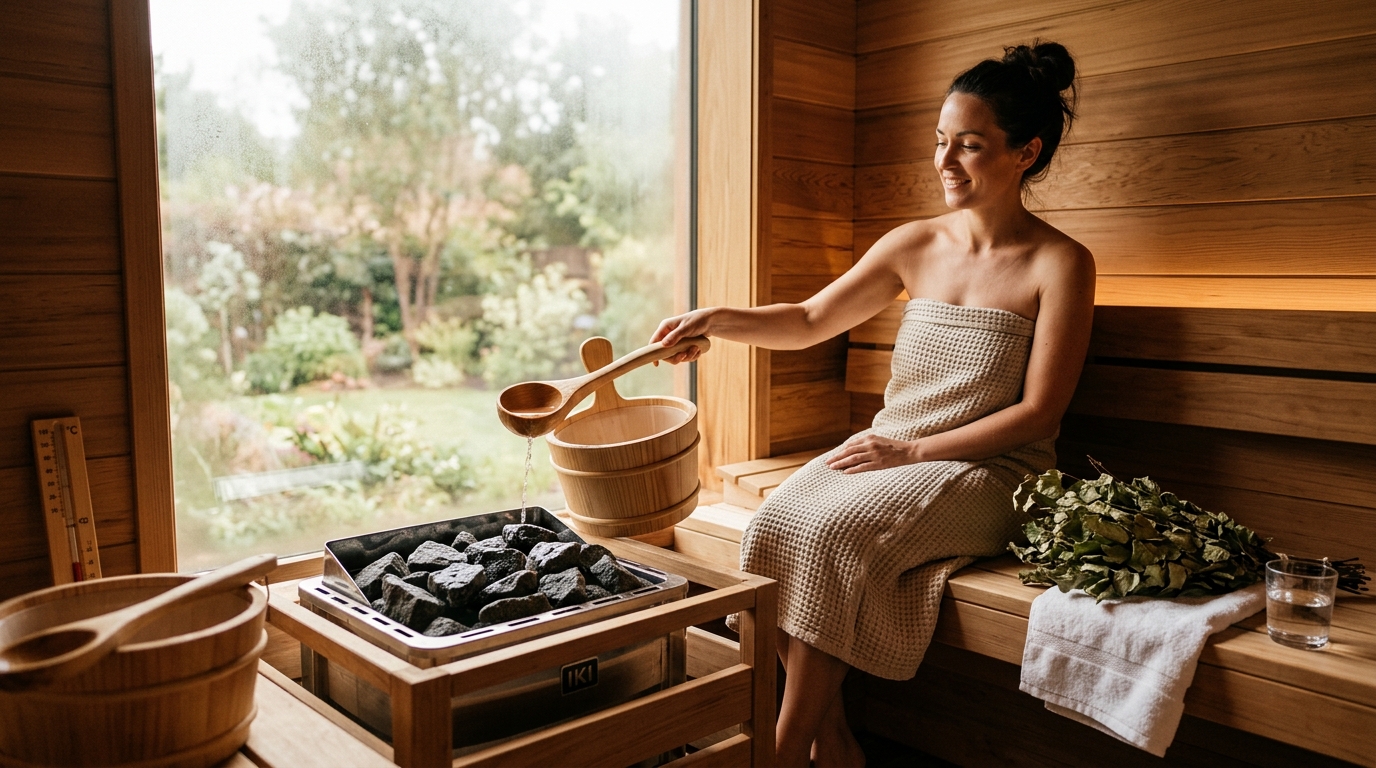
A proper sauna session runs 10–20 minutes per round at 150–195°F for a traditional Finnish sauna, or 120–140°F for infrared. Drink 16–24 oz of water before entering, exit when you are sweating freely or feel lightheaded, cool down for 5–10 minutes, then repeat for 2–3 rounds total.
What temperature should a sauna be?
Temperature is the most variable factor across sauna types, and knowing the range for your specific sauna changes how you plan each session.
| Product | Best for | Rating | Notes | |
|---|---|---|---|---|
| Traditional Finnish sauna | deepest heat, authentic löyly steam experience | ★★★★★ | 150-195°F (65-90°C). Pour water on stones for steam. Ideal for experienced users. | — |
| Infrared sauna (far-infrared) | beginners, joint comfort, lower air temperature | ★★★★★ | 120-140°F (49-60°C). No steam. Radiant heat penetrates tissue directly. | — |
| Steam room | respiratory benefits, high humidity experience | ★★★★★ | 110-120°F (43-49°C), 100% humidity. Feels as intense as a dry sauna at 165°F. | — |
| Barrel sauna (outdoor) | traditional experience in a compact outdoor form | ★★★★★ | Same protocol as Finnish sauna. Heats up in 30-45 min vs 45-60 min for a cabin. | — |
| Infrared sauna blanket | apartment use, portable entry-level option | ★★★★☆ | 110-140°F. Lie inside for 30-45 min. Good starting point before buying a cabin. | — |
For a traditional or barrel sauna, the upper bench is always significantly hotter than the lower bench — typically 10–30°F warmer at the same wall position. Newcomers should start on the lower bench for the first 5 minutes before deciding whether to move up. For infrared cabins, all sections are relatively even in temperature since the heaters surround the whole body.
Löyly (pronounced “LOY-lu”) is the steam burst created by ladling water onto hot sauna stones. It doesn’t raise the thermometer reading meaningfully, but the surge of humidity makes the perceived heat intensity jump sharply. A single ladle on 190°F stones produces a 30–60 second steam wave. Start with half a ladle to understand your tolerance before going full. The Finnish standard is roughly one ladle per round for a beginner; experienced bathers may do three or four per round.
How long should you stay in a sauna?
| Experience level | Time per round |
|---|---|
| First timer | 8–10 minutes |
| 1–4 sessions | 10–12 minutes |
| Regular user (monthly) | 12–15 minutes |
| Experienced (weekly) | 15–20 minutes |
The right exit cue: you are perspiring freely, your muscles feel deeply relaxed, and the heat feels comfortable — not oppressive. The wrong reason to stay: because you think you should hit a number. Leaving at 9 minutes because that is genuinely enough is better than forcing 20 minutes while feeling uncomfortable.
Hard limit: no more than 20 minutes in a single round for anyone. Above that, core body temperature climbs rapidly in the final minutes, and the marginal benefit over 15–20 minutes is negligible while the strain increases.
How to prepare for a sauna session
The 30–60 minutes before entering matter as much as the session itself.
- Hydrate. Drink 16–24 oz of water in the 30–60 minutes before going in. Plain water, not a sports drink. Avoid coffee and alcohol — both are diuretics that compound dehydration during the session.
- Shower first. Rinse off lotion, sunscreen, deodorant, and sweat before entering. Lotions and oils coat the skin, reduce sweat efficiency, and in public saunas it is inconsiderate to the other bathers.
- Eat light. Skip heavy meals for 1–2 hours before. The digestive system competes for blood flow with the heat-regulation response; a full stomach in the heat makes both feel worse.
- No alcohol. Alcohol combined with sauna heat produces dramatically elevated heart rate, increased dehydration, and impaired judgment about when to leave. This combination is genuinely dangerous and has caused deaths. Enjoy a cold drink after, not before.
- Bring your towel. Sit on a towel at all times — it is standard hygiene in every sauna and protects you from benches that get hot enough to be uncomfortable to bare skin. A second towel for wiping sweat off your face is useful.
How to use a sauna: step-by-step for your first session
- Pre-hydrate — 16–24 oz of water, 30–60 minutes before entering.
- Shower and rinse — wash off completely before entering.
- Enter and sit on the lower bench. The lower bench is 10–30°F cooler than the upper bench. Start here for the first 5 minutes to let your body adjust to the heat.
- Move to the upper bench if you want more heat. After 5 minutes on the lower bench, reassess. If you feel comfortable and want more intensity, move up. If the lower bench is enough, stay there — there is no rule that you must use the top bench.
- Time yourself. 10 minutes for a first session. A sauna sand timer, your watch, or the wall clock all work. Leave your phone outside — it will be damaged by the heat and the distraction pulls you out of the experience.
- Add löyly if you are in a traditional sauna. Ladle a small amount of water onto the stones (half a ladle for your first time). Wait 60 seconds to let the steam surge subside before adding more. In public saunas, ask the other bathers before throwing water.
- Exit before you feel unwell. Leave when you are sweating freely and feel relaxed, or when 10 minutes is up — whichever comes first. Do not wait until you feel dizzy.
- Cool down for 5–10 minutes. The cooling phase closes the cardiovascular circuit opened by the heat and produces the calm that follows a good sauna. Options: cold shower (30–60 seconds of cold), cold plunge (60 seconds in 55–60°F water), or sitting outside in fresh air.
- Rehydrate. 16–24 oz of water immediately after cooling down. Add an electrolyte tablet or pinch of sea salt if doing multiple rounds.
- Rest 5–10 minutes. Sit on a bench or chair, breathe normally, and let your heart rate settle before starting round two.
- Repeat for 2–3 rounds. Rounds two and three follow the same protocol. Most of the cardiovascular and recovery benefit accumulates in the first two rounds; a third adds modest relaxation benefit. Stop at three unless you have extensive experience.
How to cool down between sauna rounds
The cooling phase is not optional — it is where a significant portion of the physiological benefit from sauna actually occurs. The contrast between extreme heat and cold drives a sharp endorphin release and trains the autonomic nervous system in ways that heat alone does not replicate.
Cold plunge (best option if available). 55–60°F water. Sixty seconds is enough for a full contrast response. Do not force more than 2–3 minutes — longer does not add proportional benefit and increases hypothermia risk if you are already depleted from a long round. If your home sauna setup includes a dedicated cold plunge unit, use it between every round.
Cold shower. A regular household cold shower works well and is the most accessible option. Turn the tap fully cold for 30–60 seconds after exiting the sauna. The initial shock passes in about 10 seconds; after that it feels deeply refreshing.
Outdoor air. If the temperature outside is below 60°F, standing outdoors for 2–5 minutes provides a meaningful cooling effect. Less physiologically sharp than cold water, but genuinely effective and the method used in traditional Finnish culture (and enjoyable).
Warm-only rest. If cold exposure is not accessible or comfortable, room-temperature rest for 5–10 minutes still allows the body to cool adequately before the next round. Less contrast, but still safe.
Accessories that improve the experience
You can use a sauna with nothing but a towel. These three tools make sessions measurably better and are worth buying if you use a sauna regularly.
Best for monitoring actual bench-level temperature and humidity in any sauna type
Sauna Thermometer and Hygrometer (analog, brass)
The temperature gauge built into most sauna heaters reads the air near the lid — often 30-50°F higher than the actual temperature at bench height where you sit. A standalone brass analog combo unit mounted at bench height tells you what you are actually experiencing. Brass holds up to 250°F+ indefinitely; digital LCD displays fade under repeated thermal cycling. Mount at sitting height, not at the ceiling. Budget \$30-60 for a quality unit.
★★★★★ 4.5 · 1,800 reviews
Check current price on Amazon→Best for any traditional or barrel sauna — the essential löyly kit
Cedar Sauna Bucket and Ladle Set
A hardwood bucket with a removable plastic liner plus a long-handled ladle is the standard kit for throwing löyly. The plastic liner protects the wood from warping under constant moisture exposure; the cedar exterior stays comfortable to grip. A 12-to-16-inch ladle handle lets you reach the heater stones without putting your hand near 200°F air. Budget \$40-80 for a set that lasts 10+ years with normal use.
★★★★★ 4.6 · 2,200 reviews
Check current price on Amazon→Best for traditional sauna users who want to enhance löyly with authentic Nordic aromatherapy
Sauna Essential Oil Set (eucalyptus, pine, birch, spruce)
Add 2-5 drops to the water bucket before ladling onto stones. The steam carries the scent for 30-60 seconds per löyly. A 4-pack of traditional Finnish scents (eucalyptus, pine, birch, spruce) runs \$20-40 and covers 50-80 sessions. Use pure essential oils only — synthetic sauna fragrance products smell fine at room temperature but often turn harsh at 200°F. Eucalyptus is the most approachable starting point.
★★★★★ 4.5 · 920 reviews
Check current price on Amazon→Sauna safety: when to leave immediately
Most sauna sessions are completely safe for healthy adults. Regardless of how much time remains on the clock, know these exit signals and act on them immediately.
- Dizziness or lightheadedness. Exit immediately, sit down in a cool area, and drink water. This is the most common sign of overheating.
- Nausea. Your core temperature has risen too fast. Exit, cool down with water or cold air, and end the session for the day.
- Heart pounding in a way that feels wrong. Elevated heart rate during sauna is normal and expected — similar to moderate aerobic exercise. Pounding that feels irregular, rapid beyond what seems normal, or simply alarming is the signal to leave.
- Chest tightness or pain. Leave and call for help immediately. Do not try to finish the round.
- Confusion or difficulty forming a clear thought. Extreme heat impairs cognitive function. If you feel mentally foggy, your body is telling you to exit.
Consult a doctor before using a sauna if you have cardiovascular disease, uncontrolled high blood pressure, a recent cardiac event, or if you take diuretics, beta-blockers, or medications that affect heart rate or blood pressure. Pregnant women should avoid sauna in the first trimester and discuss any later use with their OB. The Finnish KIHD cohort study followed 2,315 regular sauna users for 20+ years and found strong cardiovascular benefits in healthy adults — but the population studied was generally healthy with no major contraindications.
What to do after your final round
- Cool down completely. After your last round, cool down as you would between rounds. Wait until your heart rate settles close to resting before moving on.
- Rehydrate with water and electrolytes. After 2–3 rounds, plain water may not replace what you lost in sweat. Add an electrolyte tablet, electrolyte powder, or a glass of coconut water.
- Rest before leaving. Give yourself 10–15 minutes sitting in a cool area before driving. The post-sauna state is deeply relaxed and temporarily hypotensive; standing up too fast can cause lightheadedness.
- Eat if you are hungry. A light meal or substantial snack 20–30 minutes post-sauna is appropriate and restores energy. Avoid a very large meal immediately after — digestion competes with recovery.
- Expect better sleep tonight. Post-sauna sleep is one of the most consistently reported benefits. The body temperature drop after cooling triggers deeper slow-wave sleep. This effect is most pronounced in evening sessions.
FAQ
Frequently asked questions
How often should you use a sauna?
Should you use a sauna before or after a workout?
What is the difference between a dry sauna and a steam room?
How much weight do you lose in a sauna?
Can you bring your phone into a sauna?
Bottom line
A sauna session done right is 10–20 minutes per round at the correct temperature for your type, a proper cool-down between rounds, and enough water before and after. Two to three rounds is the sweet spot for both first-timers and experienced bathers. The protocol is simple once you know it — the barrier is just that nobody explains the basics clearly the first time.
For everything you need to outfit a home sauna, see the picks for best sauna accessories, best sauna heaters, and read the home sauna cost guide. For a deeper look at what regular sauna use actually does for your health, read what the research says about home sauna benefits.