guides
Sauna Etiquette Guide: Rules for Public and Home Saunas
Master sauna etiquette for public gyms, spas, and home sessions — covering towel use, timing, hygiene, and unwritten rules.
 Marcus Reade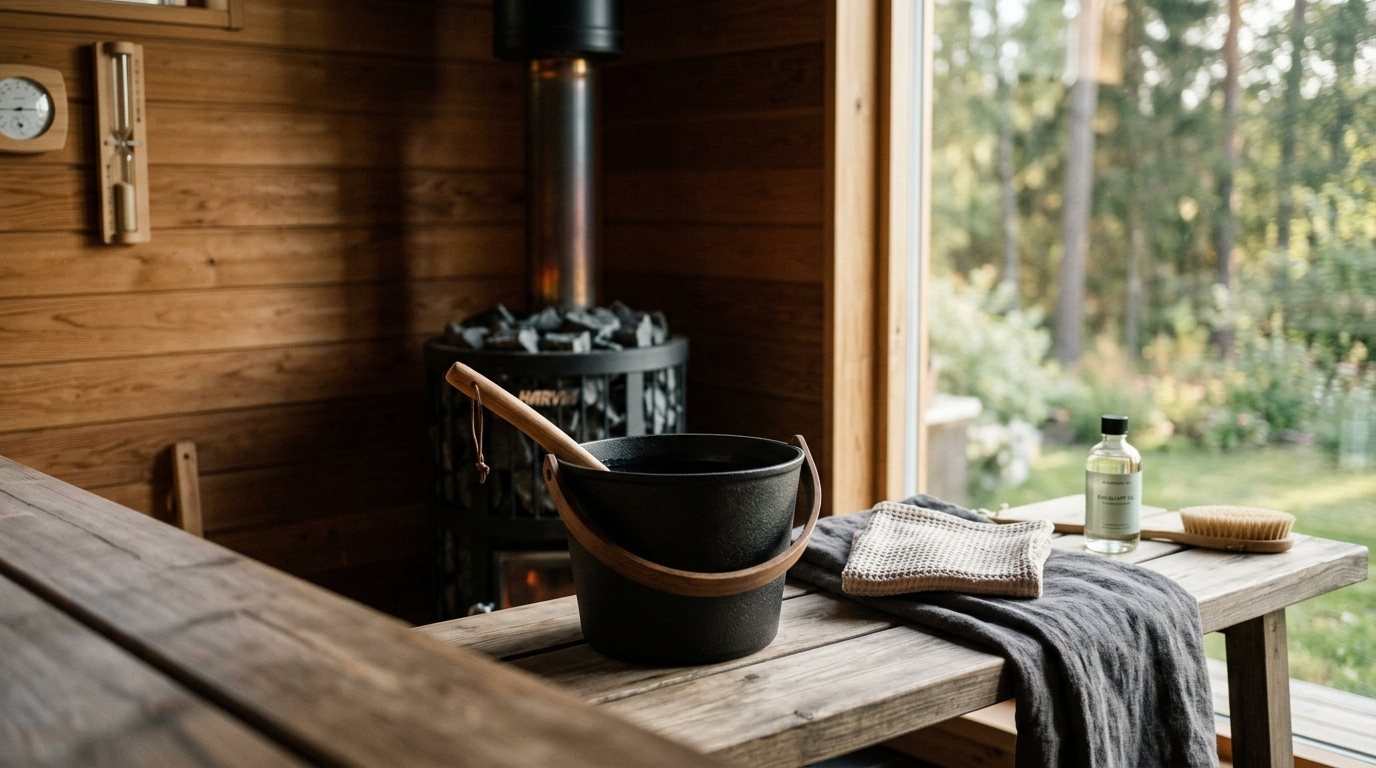
Sauna etiquette comes down to five core rules: bring a towel to sit on, shower before entering, keep conversation low, limit sessions to 15–20 minutes when others are waiting, and leave the space as you found it. Nudity norms vary by country — at US gym saunas, a towel or swimsuit is standard; in Nordic countries, nudity is traditional and expected.
Why sauna etiquette matters
A sauna is a shared thermal environment. At 170–185°F, there is no comfortable place to move if someone violates your space, dominates the bench, or introduces an overwhelming smell. The rules below are not arbitrary social conventions — they exist because small violations (wet shoes on the bench, strong cologne, a speakerphone call at full volume) have an outsized effect in a hot enclosed room with nowhere to escape.
Etiquette also varies significantly by context. The rules at a commercial gym sauna differ from those at a Korean jjimjilbang, a Finnish lakeside sauna, or a private home setup. Understanding the differences helps you apply the right framework in each environment.
Public sauna etiquette rules
At gym saunas
Gym saunas are the most common first exposure for American users — and also the setting with the weakest enforcement, which means users who do not know the norms encounter the widest variation in behavior.
Before entering:
- Shower first. Sweat from a workout contains bacteria and deodorant residue that aerosolize and concentrate in a hot enclosed space. A 60-second rinse is sufficient.
- Wear a clean towel or swimwear. Most US gym saunas require one or the other.
- Remove your shoes. Gym floors carry everything you have walked on; contaminating bench wood from shoe soles is the most common hygiene complaint in gym saunas.
Inside the sauna:
- Sit on a towel. Your towel is a barrier between your body and the bench. Without it, sweat soaks directly into the wood, which is both unhygienic and difficult to clean. This rule applies even if you are wearing a swimsuit.
- Keep your phone outside or on silent. If you must bring it in, no videos, no speaker calls, no scrolling with full screen brightness. Most veteran sauna users find a ringing phone in a sauna deeply disruptive of the environment.
- Avoid strong fragrances. Cologne and perfume intensify in heat. Even a small amount applied hours earlier can become overwhelming at sauna temperatures.
- Do not occupy more bench space than you need. If the sauna is crowded, sit upright rather than stretching out to fill an entire bench length.
Duration and exits:
- A typical session is 10–20 minutes per round. When the sauna is busy, shorter rounds with full cool-downs are more considerate than a single extended stretch.
- Exit quietly. Slamming the door sends a burst of cold air into the room and disrupts everyone inside.
At day spas and wellness centers
Spa saunas tend to have stricter posted rules and attendants who enforce them, which makes compliance easier. The main additions to the gym list:
- Towel protocols vary. Some spas provide towels at entry; others expect you to bring one from your locker. Check before entering.
- Session limits. Busy spa saunas sometimes post 10–15 minute session caps. Honor these; the staff use them to manage occupancy and air quality.
- Steam rooms. Spa steam rooms sometimes deliver eucalyptus oil through the steam system. Do not add your own. The system is calibrated for the space; unauthorized additions can overwhelm the ventilation and affect other guests.
At Korean jjimjilbangs
Jjimjilbangs are communal Korean bathhouses with multiple sauna rooms at different temperatures, typically ranging from 140°F to 200°F. Nudity in same-sex bathing areas is standard and expected — this is cultural norm, not optional social comfort. Gender-separated bathing areas require it. Mixed-gender common areas require the facility-provided shorts and top, usually included in the entry fee.
Shoes are left at the entrance. The entire facility follows a floor-based culture: street shoes belong in shoe lockers, not on tile or heated floors inside. You eat, sleep, and relax in the provided garments, not your outside clothes.
Finnish sauna traditions
Traditional Finnish sauna culture has the longest unbroken etiquette tradition — the Finnish Sauna Society was founded in 1937 — and the rules reflect both hygiene and ritual.
The shower before entry is not optional in Finnish sauna culture. You wash completely before entering, not just rinse. The sauna itself is considered clean; you bring only a clean body into it.
Loyly rights belong to the person nearest the kiuas (heater). In a shared sauna, the person on the upper bench closest to the heater pours the water. Before pouring, they gesture toward the stones or ask the room — because some users, including children and those with respiratory conditions, cannot tolerate heavy steam. In private family use, the host pours. Always ask in any shared sauna before ladling water on the stones.
Conversation is acceptable but not required. The Finnish sauna is simultaneously a social space and a contemplative one. Loud, fast conversation is unusual; quiet discussion or comfortable silence is the norm.
Sauna order in a traditional Finnish home session: the host heats the sauna, enters first to confirm the temperature is right, then invites guests. Guests of honor — elders, visitors from far away — often receive the upper bench.
Birch whisks (vihta or vasta) are used to stimulate circulation by gently beating the skin. If you are using one in a shared sauna, ask before you start — the sound and scent are distinctive and not everyone welcomes them.
Home sauna etiquette for guests
When you host sauna sessions at home, you have more latitude to set your own rules — but your guests need to know what those rules are before they step inside.
Pre-sauna briefing for new guests:
- Whether towels are provided or guests should bring their own
- Whether swimwear is required or optional
- How to use the controls, especially for traditional saunas with unfamiliar electric heaters
- Whether you will be pouring water on the stones and how much
- Where to cool down between rounds — shower, cold plunge, or outdoor area
For guests at someone else’s home sauna:
- Do not adjust the heater without asking. The host sets the temperature; if it is uncomfortable, ask before touching the controls.
- Do not pour water on the stones without asking. In a wood-fired sauna, pouring too much water too quickly can crack stones or damage an improperly heated heater.
- Do not bring food or drinks in glass containers into the sauna. Splashing in extreme heat is a safety issue, and broken glass is dangerous in a barefoot environment.
Hygiene basics every sauna user should follow
The shared nature of a sauna means individual hygiene choices affect everyone in the room.
| Rule | Why it matters |
|---|---|
| Shower before entry | Removes bacteria, deodorant, and skin products that aerosolize in heat |
| Sit on a towel | Prevents sweat from soaking into bench wood; most commercial saunas require it |
| No open wounds | An open cut or active skin infection in a hot, humid environment is a contamination risk — exit and return when healed |
| No oils or lotions on skin | Most body oils bead off in heat and contaminate bench wood; some damage cedar |
| No scented products inside | Concentrated heat amplifies fragrance; what smells mild outside becomes overwhelming at 180°F |
If you own a home sauna, regular cleaning keeps the space sanitary for guests. After each session, wipe benches with a diluted sauna cleaner and leave the door cracked to allow the wood to dry. Once a month, scrub benches with a wooden sauna brush and a natural cleaner — avoid bleach, which damages cedar and leaves a harsh chemical smell.
Best for sharing loyly in a traditional Finnish sauna session
Harvia Wooden Sauna Ladle and Bucket Set
The Harvia wooden bucket and ladle set is the standard Finnish accessory. Kiln-dried aspen stays cool to the touch at the handle, the bucket holds enough water for six to eight ladles per round, and having a proper set communicates the loyly ritual clearly to new guests. Place the bucket next to the host position on the upper bench — its presence signals who pours.
★★★★★ 4.8 · 1,240 reviews
Check current price on Amazon→What to wear in a sauna
Clothing rules vary sharply by culture and venue type.
US gym saunas: A swimsuit or a wrapped towel is standard. Most gyms require one or the other. Going without a towel beneath a swimsuit is technically permitted but considered inconsiderate by most experienced users.
Nordic saunas (Finland, Sweden, Norway, Estonia): Nudity is the traditional and expected norm in single-sex sessions. Mixed-gender home sessions among close friends or family may be nude; mixed-gender public saunas typically use towels or swimwear.
Korean jjimjilbangs: Same-sex bathing areas are nude. Mixed-gender common areas use the facility-provided shorts and top — no outside swimwear is appropriate.
Infrared sauna cabins (home use): No specific cultural tradition applies. Most users wear a towel or light shorts; some use the session for skin exposure to infrared light and prefer minimal coverage.
What not to wear:
- Underwear with metal clasps or underwire — metal conducts heat and can cause burns at high temperatures
- Synthetic workout clothes — polyester and spandex hold heat, do not breathe, and some release off-gassing at high temperatures
- Jewelry — rings, bracelets, and necklaces heat quickly at sauna temperatures; remove them before entering
Best for sitting in a shared sauna — more absorbent than a standard beach towel
Turkish Cotton Waffle Weave Sauna Towel Set
Waffle-weave Turkish cotton absorbs sweat faster than terrycloth beach towels and dries quickly between rounds. A dedicated sauna towel set that lives at your sauna means guests are never scrambling for something from the linen closet. Buy two per person for a two-round session with a clean towel for each round.
★★★★★ 4.5 · 620 reviews
Check current price on Amazon→Timing your sauna session
Rounds and cooling
The most effective and considerate sauna format uses multiple shorter rounds rather than one long session:
- Round 1: 10–15 minutes at target temperature
- Cool-down: 5–10 minutes — shower, cold plunge, or outdoor air
- Rest: 5–10 minutes seated or lying down, with hydration
- Round 2: 10–15 minutes
- Final cool-down and rest
This format produces better physiological benefit than a single long session and naturally creates intervals that allow other users to enter and exit in shared settings without waiting indefinitely.
When to exit
Exit before you feel you must. Warning signs that you have stayed too long:
- Dizziness or lightheadedness
- Nausea
- Heart rate that feels uncomfortably high or irregular
- Skin that feels tight rather than continuing to sweat freely
These signals mean your core temperature has climbed past your comfortable range. Step out, cool down, and hydrate. Do not push through these signals — heat illness develops rapidly at sauna temperatures and exits become harder as symptoms worsen.
Hydration timing
Drink 16–20 oz of water before your sauna session. Water is sufficient for sessions under 60 minutes total. Alcohol before a sauna is a genuine safety risk — it impairs the thermoregulatory signals that tell you to exit, increases dehydration rate, and is associated with sauna-related fatalities in both Finnish and US health data. Save the post-sauna cold beer for after you have fully cooled down and rehydrated.
FAQ
Frequently asked questions
Is it rude to talk in a sauna?
Do I have to be naked in a sauna?
Can I bring my phone into a sauna?
How do I know when to add water to sauna stones?
How long should I stay in a public sauna?
Can I use essential oils in a shared sauna?
Bottom line
Sauna etiquette is mostly common sense applied to a specific thermal context: shower before entering, sit on a towel, keep quiet, respect other users, and exit when your body tells you to. The rules get more specific by culture — Nordic traditions around loyly, Korean norms in jjimjilbangs, American gym policies — but the underlying principle is the same: you are sharing a hot enclosed space with other people, and small violations have an outsized impact.
If you are new to sauna use, read how to use a sauna for a complete beginner protocol. If you are building or buying a home setup, see the home sauna cost guide and the best outdoor sauna kits for equipment options. For timing and recovery protocols, the sauna benefits for recovery guide covers the research on when and how long to go.