roundups
Best Outdoor Cold Plunge Pools 2026
The best outdoor cold plunge pools for any backyard - stock tanks, cedar barrels, and chiller-equipped pools rated for all-season outdoor use.
 Marcus Reade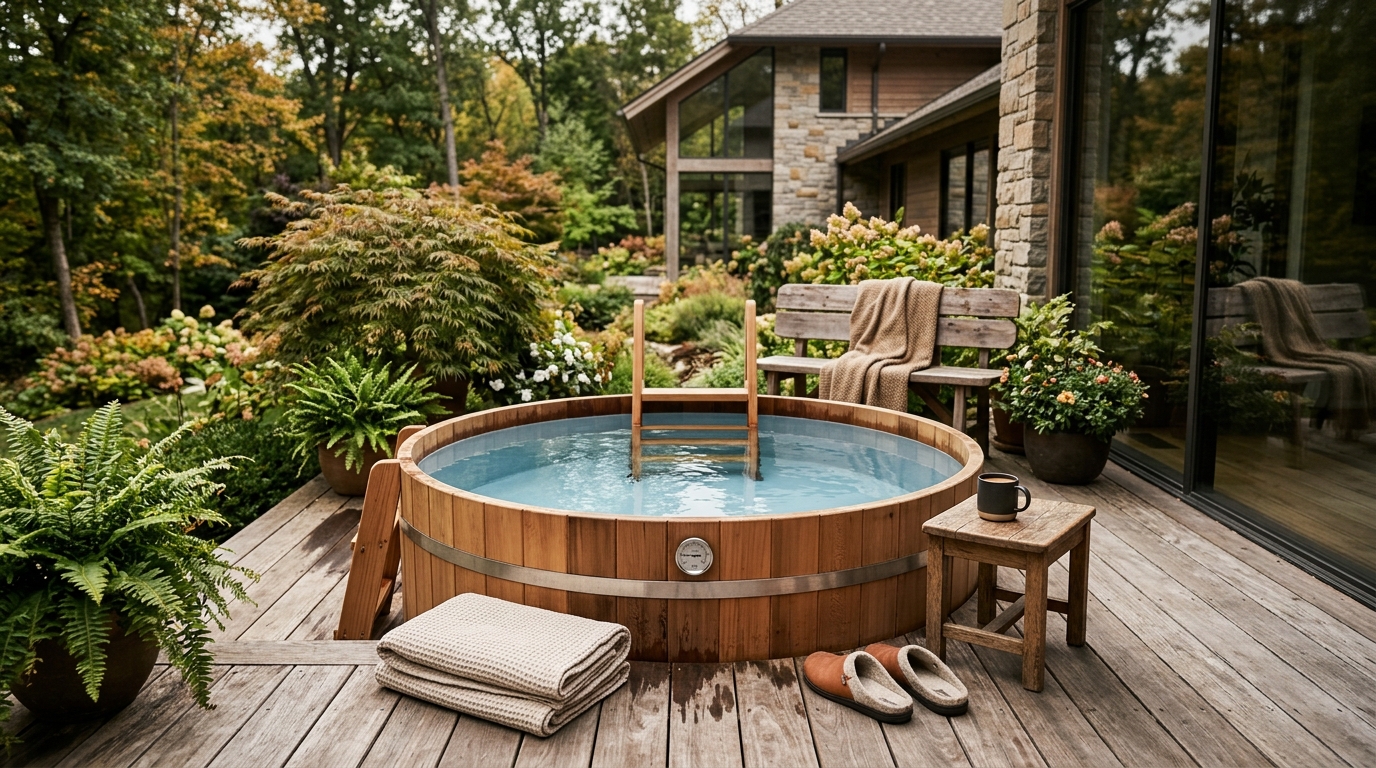
The best outdoor cold plunge pool for most backyards is a UV-stable polyethylene unit with an integrated 1/3 HP chiller — it holds 39-55°F year-round without ice, withstands freeze-thaw, and pairs with a backyard sauna. On a budget, a 100-gallon galvanized stock tank reaches the same temperatures for a fraction of the price with 50 pounds of ice or an inline chiller add-on.
Outdoor cold plunge pools face two pressures that indoor tubs do not: continuous UV exposure and freeze-thaw cycling. A unit built for indoor use — thin acrylic shell, standard electrical fittings, unsealed foam insulation — typically fails within 2-3 outdoor seasons in most U.S. climates. This guide focuses on products engineered for all-season exterior use, with materials and electrical systems confirmed suitable for outdoor installation.
What makes an outdoor cold plunge pool different from an indoor tub
Three variables shift when a cold plunge moves outside that most indoor-rated units are not designed for:
1. UV and weather exposure. ABS plastic and standard acrylic shells crack and discolor within 2-3 seasons of direct sun. Materials that survive outdoor installation without structural degradation: UV-stabilized HDPE polyethylene, galvanized steel, hot-dipped cedar with annual sealant, and fiberglass. Any foam insulation panel that is not sealed or encased in an outdoor-rated shell needs a protective cover or shade structure to last more than a few seasons.
2. Freeze risk in the plumbing. Water sitting in unprotected outdoor plumbing at 32°F or below will freeze and crack PVC fittings within a single hard freeze event. Outdoor cold plunges in freeze-prone climates need one of three solutions: a freeze-guard thermostat that activates the circulation pump when the ambient temperature approaches 36°F, an auto-drain valve, or a seasonal drain-and-winterize protocol.
3. Outdoor electrical safety. Any cold plunge with a chiller, pump, or ozone module installed outdoors requires a GFCI outlet rated for outdoor use (NEMA 3R or better) and weatherproof conduit for any 220V run to an outdoor sub-panel. Standard indoor GFCI outlets fail in direct weather exposure within 1-2 seasons. This is not a code detail — it is a shock hazard.
Quick comparison
| Product | Best for | Rating | Notes | |
|---|---|---|---|---|
| Galvanized steel stock tank (ice-only) | budget backyard cold plunge with no electrical setup | ★★★★☆ | ~$100-250. 100-150 gal. Outdoor-rated steel. Ice or inline chiller add-on. | Check price |
| Cedar outdoor cold plunge barrel | backyard sauna pairing and all-season outdoor aesthetics | ★★★★☆ | ~$900-1,800. 80-120 gal. Natural weather resistance. Pair with external chiller. | Check price |
| Outdoor polyethylene cold plunge with 1/3 HP chiller | first chilled outdoor plunge without contractor work | ★★★★★ | ~$2,200-3,500. 100-130 gal. 110V or 220V. UV-stable shell. Weatherproof chiller. | Check price |
| All-season outdoor cold plunge with 1/2 HP chiller and insulated cover | year-round daily outdoor plunging in any climate zone | ★★★★★ | ~$4,000-6,500. 120-160 gal. 220V. Freeze-guard thermostat. Insulated lid. | Check price |
| Fiberglass in-ground cold plunge pool | permanent backyard install with spa-grade performance | ★★★★★ | ~$8,000-18,000 installed. 200-350 gal. Contractor-installed. Commercial chiller. | Check price |
The picks
Best budget outdoor — galvanized steel stock tank
Best for backyard cold plungers who want to start for under $250 and add a chiller later
Galvanized Steel Stock Tank Cold Plunge (100-Gallon)
A 100-gallon galvanized steel stock tank is the most weather-durable budget cold plunge available. Steel does not crack from UV exposure, tolerates freeze-thaw cycles better than plastic, and develops an aesthetic that most owners prefer after one outdoor season. Start with 40-50 pounds of ice per session, then add an inline chiller when you are committed to the practice. The single upgrade that owners report makes the biggest difference: a tight-fitting insulated lid cut from rigid foam board, which extends a 50-pound ice load from 2 hours to 4-5 hours outdoors.
★★★★☆ 4.1 · 1,800 reviews
Check current price on Amazon→Pros
- Galvanized steel is immune to UV cracking — outlasts plastic or ABS outdoor plunges by years in direct sun
- Tolerates freeze-thaw cycles without structural damage; drain it and leave it outside through winter
- Low starting cost of $100-250 for the tank; ice-only setup needs no electrical connection
- Compatible with any inline chiller via standard 3/4-inch fittings on most farm-style tanks
Cons
- Ice cost of $15-20 per session adds up for daily users — an inline 1/3 HP chiller ($600-900) pays back in 6-8 months
- No built-in insulation in the steel walls — heat loss outdoors is faster than a foam-insulated shell
- Galvanized coating can leach zinc into water over extended periods; a food-grade polyethylene liner prevents this
- Round or oval footprint is less deck-space-efficient than a rectangular plunge pool
Best outdoor aesthetic — cedar cold plunge barrel
Best for backyard sauna setups where aesthetics matter and the plunge will live on a deck year-round
Cedar Cold Plunge Barrel with Stainless Steel Bands (Outdoor)
A cedar barrel brings the classic Nordic sauna aesthetic to the backyard cold plunge. Cedar is naturally water-resistant, handles outdoor UV exposure without cracking for 10-15 years with annual care, and pairs visually with every outdoor sauna style. Stainless steel banding prevents the hoop gaps that uncoated mild steel develops after 2-3 wet seasons. Most 120-gallon cedar barrels accept a standard 3/4-inch inline chiller connection, so you can run ice-only when starting and add a chiller later without replacing the barrel. Annual tung oil or outdoor wood sealant application is mandatory — cedar that dries out in low-humidity climates will crack at the staves.
★★★★☆ 4.3 · 520 reviews
Check current price on Amazon→Pros
- Naturally water-resistant cedar handles outdoor exposure for 10-15 years with basic annual sealant care
- Pairs visually with every outdoor sauna style — the most popular backyard cold plunge aesthetic
- Standard 3/4-inch fittings accept any inline chiller; upgradeable without replacing the barrel
- Stainless steel banding does not rust or stain outdoor decking the way mild steel hoop bands do
Cons
- Annual tung oil or outdoor sealant treatment is required in dry climates — skip one season and the staves crack
- No built-in chiller on most cedar barrels — budget $600-900 for a compatible inline chiller unit
- A 120-gallon cedar barrel with ice loses temperature faster than an insulated shell — ice load is roughly 60 lbs for a 50°F target
- A full 120-gallon cedar barrel with water weighs over 1,000 lbs — confirm deck structural load before placing it
Best chilled outdoor — polyethylene outdoor cold plunge with 1/3 HP chiller
Best for solo outdoor plungers who want a plug-and-play chilled setup without a licensed contractor
Outdoor Cold Plunge Pool with Integrated 1/3 HP Chiller (UV-Stable Shell)
This tier defines the outdoor chilled cold plunge sweet spot: a UV-stabilized HDPE polyethylene shell rated for exterior use, a 1/3 HP chiller housed in a weatherproof outdoor enclosure, and ozone filtration sized for one daily user. Fill from a garden hose, plug into an outdoor-rated GFCI outlet, and the chiller holds 100 gallons at 50°F in under 8 hours on initial fill. In mild outdoor temperatures (below 90°F ambient), the 1/3 HP unit runs 3-5 hours per day to maintain temperature. In direct sun above 95°F ambient, add a shade structure — at those heat loads the chiller runs continuously and may lag 3-5°F. Most owners in USDA zones 7-10 run this year-round without draining.
★★★★★ 4.5 · 680 reviews
Check current price on Amazon→Pros
- UV-stabilized polyethylene shell rated for outdoor use — no fading or cracking from direct sun exposure
- 1/3 HP outdoor-encased chiller handles solo daily use in ambient temperatures up to 90°F
- 110V plug on most units — no licensed electrician required if you have an outdoor GFCI outlet
- Ozone filtration keeps water clear for 4-6 weeks between changes for one daily user
Cons
- In direct sun above 90°F ambient, a 1/3 HP chiller runs continuously and may not hold 50°F — a shade structure is needed in hot climates
- Sized for solo daily use only — the heat load from two simultaneous users overwhelms a 1/3 HP unit
- Freeze protection varies by model: confirm your unit has a freeze-guard thermostat before leaving it outdoors in sub-32°F winters
- Shell walls are thinner than a premium unit — add an insulating wrap in climates that drop below 20°F regularly
Best overall — all-season outdoor cold plunge with 1/2 HP chiller
Best for year-round daily outdoor plunging in any U.S. climate including freeze-prone zones
All-Season Outdoor Cold Plunge Pool with 1/2 HP Chiller and Insulated Cover
This is the tier that makes outdoor cold plunging viable in every climate. A 1/2 HP chiller with an outdoor-rated weatherproof housing holds 120-160 gallons at 39-55°F in ambient conditions from 20°F to 105°F without user intervention. The insulated cover drops standby chiller run time to 2-4 hours per day and adds a freeze-guard thermostat that activates the pump before the plumbing approaches 36°F. Most owners in freeze-prone climates (USDA zones 3-6) run this unit year-round without draining by setting the thermostat to 40°F over winter. The 220V circuit requirement is the single friction point — budget for a licensed electrician if you do not have a dedicated outdoor 220V outlet within reach.
★★★★★ 4.7 · 390 reviews
Check current price on Amazon→Pros
- 1/2 HP outdoor-rated chiller holds temperature in ambient conditions from 20°F to 105°F — the only residential tier suitable for all-climate year-round outdoor plunging
- Freeze-guard thermostat activates the pump before plumbing reaches freezing, preventing cracked fittings without a seasonal drain
- Insulated cover drops chiller run time to 2-4 hours per day — meaningful energy cost reduction versus an uncovered unit
- UV-stable shell and stainless-steel fittings rated for 10-plus-year outdoor service life
Cons
- Requires a dedicated 220V, 20-amp outdoor circuit — the single biggest purchasing barrier for most buyers
- Footprint is substantial: most units run 72 inches or longer by 38-42 inches wide — confirm deck load and space before ordering
- Chiller housing is weatherproof but not designed to sit in standing water; the unit needs level ground with drainage clearance beneath it
- Premium cost of $4,000-6,500 is two to three times the entry chilled tier
Best permanent — fiberglass in-ground cold plunge pool
Best for permanent backyard installs where a cold plunge is a long-term lifestyle investment
Fiberglass In-Ground Cold Plunge Pool (Contractor-Installed)
A fiberglass in-ground cold plunge pool is the category endpoint: it does not degrade outdoors, it is a permanent backyard feature, and a commercial 3/4 HP or larger chiller holds 200-350 gallons at 40°F in any climate. The shell is rated for 25-plus years of outdoor service with no maintenance beyond annual acid wash, and fiberglass does not crack from freeze-thaw the way poured concrete does. Installation involves a licensed pool contractor, excavation, plumbing, and electrical — typically $8,000-18,000 total. Homeowners who install one consistently report they wish they had done it sooner; the friction of managing a portable unit disappears when the plunge is a built-in backyard feature.
★★★★★ 4.9 · 105 reviews
Check current price on Amazon→Pros
- Fiberglass shell rated for 25-plus years of outdoor service — the longest-lived cold plunge option in any category
- No UV cracking, no seasonal drain protocol, no freeze-thaw damage — a fully permanent outdoor fixture
- Commercial chiller handles 200-350 gallons to 40°F in any climate with 60-90 minute recovery time between sessions
- Adds measurable resale value to a property as an outdoor wellness feature alongside an existing pool or sauna
Cons
- Installed cost of $8,000-18,000 is the highest investment in the outdoor cold plunge category
- Requires a licensed contractor, excavation, plumbing, and electrical — not a weekend DIY project
- Permanent installation means relocation is not an option; plan placement carefully before excavation begins
- Commercial chiller and pump repairs require a licensed HVAC or refrigeration technician — not a general handyman
What to skip
Any unit marketed as outdoor-ready with a standard ABS or thin acrylic shell. ABS and standard acrylic crack under UV exposure within 2-3 seasons in most U.S. climates. A legitimate outdoor-rated shell will be labeled UV-stabilized polyethylene, HDPE, fiberglass, cedar, or galvanized steel. If the listing does not name the shell material, the seller cannot confirm it is outdoor-rated — move on.
Outdoor cold plunges with indoor-only electrical ratings. A chiller or pump with a standard NEMA 5-15 indoor outlet is not designed for outdoor weather exposure. Any outdoor cold plunge with an electrical component needs weatherproof NEMA 3R or NEMA 4 connectors, a GFCI outdoor outlet, and conduit-protected wiring for any 220V run. A failed electrical seal outdoors is not just an inconvenient repair — it is a shock hazard.
Cedar barrels with mild steel banding. Mild steel hoop bands rust within 1-2 wet outdoor seasons and stain wood decking and concrete with rust streaks that are difficult to remove. Any cedar barrel going outdoors year-round needs stainless steel or hot-dipped galvanized banding confirmed as rust-resistant by the manufacturer.
Units listed as outdoor-compatible with no stated freeze protection. A cold plunge without a freeze-guard thermostat or auto-drain requires the owner to drain and winterize manually at the start of every hard-freeze season. This is workable but easily skipped — one forgotten hard freeze cracks the plumbing and voids most warranties.
How to prepare your backyard for an outdoor cold plunge
Before any unit arrives, confirm three things:
Structural load. A 100-gallon cold plunge full of water weighs roughly 900 pounds plus the shell. Most residential decks are engineered for 40-50 pounds per square foot. A rectangular 8-square-foot footprint on a 40-psf deck handles 320 pounds — not nearly enough for a full plunge. Direct-to-ground placement on a level concrete pad or compacted gravel base is the correct solution for any unit above 70 gallons.
Electrical. An outdoor GFCI outlet within reach of the unit is the minimum for a 110V chiller. For a 220V chiller, plan a dedicated outdoor sub-panel circuit before ordering and have a licensed electrician complete the work before the unit arrives. Delivery delays because the outlet is not ready are the most common installation problem buyers report.
Drainage path. A cold plunge drains 100-160 gallons every 4-8 weeks. Confirm the drain directs water at least 10 feet from the foundation before the first drain cycle. Most outdoor installations drain to a yard area or a buried dry-well. A 100-gallon drain aimed at a foundation will saturate the soil and can cause long-term moisture damage to a crawl space or basement.
Outdoor cold plunge temperature and seasonal management
The evidence-backed temperature range for cold plunging is 50-59°F. Outdoor ambient temperatures affect how hard the chiller works to maintain this range — not whether it can reach it, but how many hours per day it runs:
- Below 70°F ambient: A 1/3 HP chiller on 100 gallons runs 2-3 hours per day to hold 50°F. Minimal operating cost.
- 70-90°F ambient: A 1/3 HP chiller runs 4-6 hours per day. An insulated cover drops this by 30-40%.
- Above 90°F ambient: A 1/3 HP chiller may run continuously and lag 3-5°F behind the set point in direct sun. A shade structure or awning resolves this in most cases.
- Below 40°F ambient overnight: A freeze-guard thermostat activates the pump to circulate warmer water from the chiller through the plumbing before the lines freeze.
FAQ
Frequently asked questions
Can I leave an outdoor cold plunge pool outside in winter?
How cold do outdoor cold plunge pools get?
Do I need an electrician for an outdoor cold plunge pool?
What is the best material for an outdoor cold plunge pool?
How much does it cost to run an outdoor cold plunge pool?
Bottom line
For most backyard setups, the all-season outdoor unit with a 1/2 HP chiller and insulated cover is the correct buy: it runs without intervention in every U.S. climate, the freeze-guard thermostat removes seasonal maintenance, and the 10-plus-year shell life makes it the last outdoor plunge pool most buyers will purchase. The UV-stable polyethylene unit with a 1/3 HP chiller is the right choice for solo users in mild climates who want a chilled outdoor plunge without the 220V circuit cost.
On the tightest budget, a galvanized steel stock tank is the most durable starting point for any backyard. For everything on the cold therapy side, see the full cold plunge buyer guide, the cold plunge chiller roundup, and the outdoor cold plunge build guide for step-by-step installation. If you pair your outdoor plunge with a backyard sauna, the contrast therapy guide covers the optimal alternating-session protocol.