guides
Sauna for Inflammation: What the Research Shows
How regular sauna sessions reduce CRP and IL-6, which protocols work best, and evidence-based session guidelines for chronic inflammation.
 Marcus Reade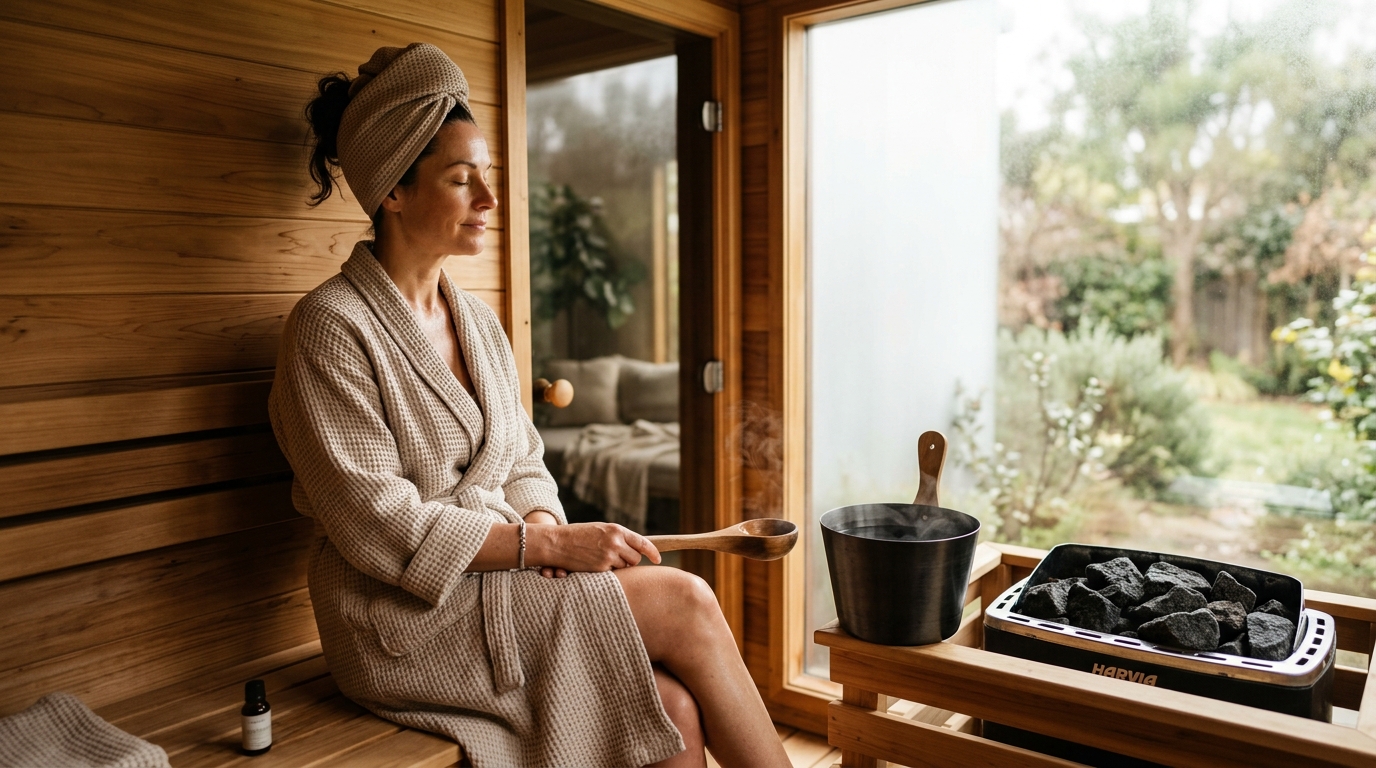
Quick answer: Regular sauna sessions at 170–190°F measurably reduce C-reactive protein (CRP) and interleukin-6 (IL-6) — two primary markers of chronic inflammation — with effects detectable after four weeks of two-to-three sessions per week. Finnish cohort data show 4–7 weekly sessions cut cardiovascular inflammation risk by up to 50% compared to once-weekly use.
How does sauna reduce inflammation?
The anti-inflammatory effects of regular sauna use are not a single mechanism but a convergence of three distinct physiological responses to heat. Understanding each helps you program sessions to target the specific inflammatory driver you want to address.
Heat shock proteins and cellular repair
When core body temperature rises by 1–2°F — which happens reliably during a 15-minute session at 170°F — the body rapidly increases production of heat shock proteins (HSPs), particularly HSP70 and HSP90. These proteins are molecular chaperones: they prevent damaged or misfolded proteins from triggering uncontrolled inflammatory cascades inside cells.
This is directly relevant to chronic inflammation. A significant share of low-grade systemic inflammation originates from protein aggregates — misfolded proteins that accumulate in tissues and signal immune cells to mount a response. HSPs break down these aggregates and restore protein homeostasis. The result is a measurable reduction in cellular inflammatory signaling that extends for 24–48 hours post-session.
Regular sauna practice upregulates the baseline HSP response, meaning the system becomes progressively more efficient at clearing protein aggregates over time. This adaptation is one reason the anti-inflammatory benefits of sauna are greater in consistent practitioners than in occasional users.
Cytokine modulation
Saunas measurably reduce circulating levels of pro-inflammatory cytokines — the chemical messengers that coordinate inflammatory responses — including:
- Interleukin-6 (IL-6): A key driver of systemic inflammation and a predictor of cardiovascular disease, arthritis, and metabolic syndrome
- Tumor necrosis factor-alpha (TNF-alpha): Elevated in chronic inflammatory conditions including rheumatoid arthritis and inflammatory bowel disease
- C-reactive protein (CRP): The most commonly measured inflammation marker in clinical settings; elevated CRP is independently associated with cardiovascular risk
A 2018 study published in Complementary Therapies in Medicine found that eight weeks of regular sauna sessions significantly reduced CRP and TNF-alpha in participants with chronic low back pain — a condition driven substantially by inflammatory load. A 2024 meta-analysis confirmed consistent CRP reduction across multiple sauna study populations.
Critically, sauna does not simply suppress all cytokine activity. Anti-inflammatory cytokines like IL-10 — which regulate and resolve inflammation rather than driving it — are maintained or increased during heat exposure. This selective modulation, suppressing harmful inflammatory signals while preserving regulatory ones, is preferable to broad anti-inflammatory drugs, which suppress the full cytokine spectrum including signals necessary for tissue repair.
Autonomic nervous system regulation
Chronic inflammation and chronic sympathetic nervous system (SNS) overactivation reinforce each other. Elevated SNS tone promotes inflammatory signaling; systemic inflammation, in turn, keeps the SNS in a hyperactivated state. Breaking this cycle is one of the underappreciated mechanisms by which sauna reduces long-term inflammatory burden.
During a sauna session, the cardiovascular and thermoregulatory demands force the body into a high-output state. Upon exiting the sauna and cooling down, there is a pronounced parasympathetic rebound — a shift toward the rest-and-recover nervous system state. Over weeks of regular sessions, this pattern trains the autonomic nervous system toward lower baseline sympathetic tone, reducing one of the key upstream drivers of chronic inflammatory signaling.
This effect is amplified by contrast therapy (alternating sauna and cold exposure), which produces a more pronounced autonomic swing — a stronger sympathetic activation during cold followed by a deeper parasympathetic rebound. For people managing stress-driven inflammation, contrast therapy protocols often produce faster improvement than sauna alone.
Which inflammation markers does sauna improve?
| Product | Best for | Rating | Notes | |
|---|---|---|---|---|
| C-reactive protein (CRP) | Most-studied marker; clear dose-response with session frequency | — | CRP reductions of 20-40% reported in studies using 3-4 sessions per week over 4-8 weeks. CRP is the primary marker tracked in cardiovascular inflammation research and the one most consistently responsive to sauna practice. | Check price |
| Interleukin-6 (IL-6) | Key driver of systemic inflammation and metabolic syndrome | — | IL-6 reductions documented across multiple sauna study populations. IL-6 is upstream of CRP — reducing IL-6 production is part of why CRP falls with regular sauna use. | Check price |
| TNF-alpha | Chronic inflammatory disease markers (arthritis, IBD) | — | TNF-alpha reduction shown in the 2018 Complementary Therapies in Medicine study. Most relevant for people managing diagnosed chronic inflammatory conditions rather than general wellness. | Check price |
| Oxidative stress markers | Long-term cellular aging and tissue damage prevention | — | Regular sauna use increases activity of endogenous antioxidant enzymes including superoxide dismutase (SOD) and glutathione peroxidase. Reduced oxidative stress is a downstream effect of lower inflammatory burden rather than a direct sauna mechanism. | Check price |
How long and how hot for anti-inflammatory effects?
Temperature and duration work together — below certain thresholds, the anti-inflammatory mechanisms do not engage reliably. Here are the parameters research supports:
Traditional sauna:
- Temperature: 170–195°F (77–91°C)
- Duration: 15–20 minutes minimum per session
- Frequency: 3–4 sessions per week for measurable CRP reduction; 4–7 sessions per week for maximum cardiovascular inflammation reduction per Finnish cohort data
Infrared sauna:
- Temperature: 130–145°F (54–63°C)
- Duration: 30–45 minutes per session (longer to compensate for lower air temperature)
- Frequency: same as traditional — 3–4 or more sessions per week
The critical threshold is achieving sustained deep tissue warming — a rise in core body temperature of at least 1°F. Sessions below 160°F in a traditional sauna or below 120°F in an infrared sauna are unlikely to reliably reach this threshold within a 20-minute window.
A practical rule: if you are not sweating moderately within the first 10 minutes, the temperature is too low or the room has not preheated sufficiently. Always verify actual bench-height temperature with a wall thermometer before starting your session — the thermostat reading is often 15–25°F off from actual bench temperature, particularly in portable or older units.
Step-by-step sauna protocol for inflammation
- Preheat to temperature. Traditional sauna: target 175–185°F at bench height. Infrared: 130–140°F. Allow 30–45 minutes of preheat before entering; do not enter an infrared cabin immediately after switching it on.
- Hydrate before entering. Drink 16 oz of water or an electrolyte mix 20–30 minutes before your session. Dehydration amplifies cardiovascular strain and blunts the anti-inflammatory response by reducing plasma volume.
- Enter and settle at mid-to-upper bench level. In a traditional sauna, upper bench air is 20–40°F hotter than lower bench air. For maximum heat exposure and anti-inflammatory benefit, sit at the highest comfortable bench level.
- Add steam (optional, traditional sauna). Ladling water over the stones produces a brief humidity spike that significantly increases perceived heat without changing thermostat settings. Use one to two ladles every 5–7 minutes for sustained heat throughout the session.
- Stay for 15–20 minutes (traditional) or 30–45 minutes (infrared). Breathe steadily and allow your body to sweat fully. Exit if you feel light-headed or nauseated — these are early signs of heat stress, not markers of a more effective session.
- Cool down fully between rounds. If doing multiple rounds, allow heart rate and skin temperature to normalize between sessions — 10–15 minutes in a cool room or a brief cool shower.
- Rehydrate post-session. Replace fluids and electrolytes within 30 minutes of exiting. A 20-minute sauna session at 180°F typically produces 0.5–1.5 lbs of sweat loss.
- Repeat 3–4 times per week. Anti-inflammatory CRP reduction requires consistent weekly practice over 4–8 weeks. Occasional sessions produce acute effects that do not accumulate into lasting biomarker improvement.
Infrared vs traditional sauna for inflammation
Both sauna types reduce inflammation via the same core mechanisms — the key variable is the thermal dose delivered per session, which differs by design.
Traditional saunas heat the air to 170–195°F, warming the body primarily via convection and conduction. The high air temperature produces rapid sweating and deep tissue warming within 10–15 minutes.
Infrared saunas emit radiant heat at 130–145°F that penetrates tissue directly (2–3 cm depth), warming the body from the inside out at lower air temperature. Because the air itself is cooler, sessions must run 30–45 minutes to accumulate comparable thermal load.
For anti-inflammatory outcomes: both produce similar results when sessions are dosed appropriately. The 2018 chronic back pain study used traditional sauna; emerging infrared sauna research shows equivalent CRP reductions at matched thermal loads.
Practical consideration: infrared saunas are typically more tolerable for people with cardiovascular conditions, respiratory issues, or heat sensitivity because the lower air temperature is less taxing on the respiratory system. For most healthy adults, the choice comes down to personal comfort, home space, and budget rather than a meaningful effectiveness differential.
Gear for your anti-inflammation sauna practice
Best for verifying bench-height temperature reaches the anti-inflammatory threshold of 170°F before every session
Digital Sauna Thermometer and Hygrometer
Most sauna thermostats read 15-25°F higher than actual bench-height temperature. If you are targeting anti-inflammatory benefits, you need to know the real temperature at body level — not the thermostat setting. Mount a digital thermometer at shoulder height on the sauna wall. A hygrometer reading is a bonus: optimal steam sessions run at 10-20% relative humidity, which intensifies the heat stimulus without becoming oppressively humid.
★★★★★ 4.6 · 3,100 reviews
Check current price on Amazon→Best for adding steam bursts that intensify anti-inflammatory heat exposure without raising thermostat settings
Cedar Sauna Bucket and Ladle Set
Ladling water over hot sauna stones produces a brief, intense humidity spike that significantly increases perceived heat and sweating rate within a traditional sauna session. For anti-inflammatory protocols, this lets you intensify thermal stress in the final 5-10 minutes of a session — pushing deeper into the heat shock protein response zone — without having to set the thermostat higher. A cedar bucket keeps water clean and adds an authentic Finnish sauna character to the practice.
★★★★★ 4.7 · 2,100 reviews
Check current price on Amazon→Best for replacing sodium and electrolytes lost during anti-inflammatory sauna sessions to maintain plasma volume
Electrolyte Drink Mix for Sauna Recovery
A 20-minute sauna session at 180°F strips 0.5-1.5 lbs of fluid — significant enough to meaningfully reduce plasma volume, which blunts the anti-inflammatory response and increases cardiovascular strain. Plain water restores fluid volume but leaves you sodium-depleted. An electrolyte mix with 800-1000mg sodium per serving and no sugar corrects both. Drink one serving mixed in 20 oz of water immediately after exiting the sauna.
★★★★★ 4.8 · 11,200 reviews
Check current price on Amazon→FAQ
Frequently asked questions
Does sauna reduce inflammation?
How long do I need to sit in a sauna for anti-inflammatory benefits?
How often should I sauna to reduce inflammation?
Is infrared or traditional sauna better for inflammation?
Can sauna make inflammation worse?
What temperature should the sauna be for anti-inflammatory effects?
Bottom line
The research on sauna and inflammation is more consistent than most people expect. Regular sessions — three to four times per week, 15–20 minutes at 170°F or above — measurably reduce CRP, IL-6, and TNF-alpha over four to eight weeks of consistent practice. The Finnish population data are particularly striking: people who sauna four to seven times per week show up to 50% lower cardiovascular inflammation risk than those who go once per week, confirming a real dose-response relationship worth taking seriously.
The key is consistency. Anti-inflammatory benefits do not accumulate from occasional sessions — they require regular, repeated thermal stress applied often enough to drive the adaptive HSP upregulation, cytokine rebalancing, and autonomic nervous system regulation that underpin the effect. Treat it like exercise: the inflammation-reducing adaptation lives in the training frequency, not any single session.
For optimal results, combine three to four sauna sessions per week with proper hydration, verify you are reaching therapeutic temperature at bench height, and pair with cold exposure if managing active inflammatory load. Read our contrast therapy guide for protocols that combine heat and cold systematically, and see how often should you sauna for frequency guidance across different health goals. For a complete session walkthrough from setup to exit, start with how to use a sauna. For gear, our best home saunas roundup covers the full range from budget portable units to full infrared cabins.