guides
Home Sauna Installation Guide (DIY vs Contractor, Electrical)
Step-by-step home sauna install: location selection, electrical (240V), ventilation, framing. DIY paths plus when to hire a contractor.
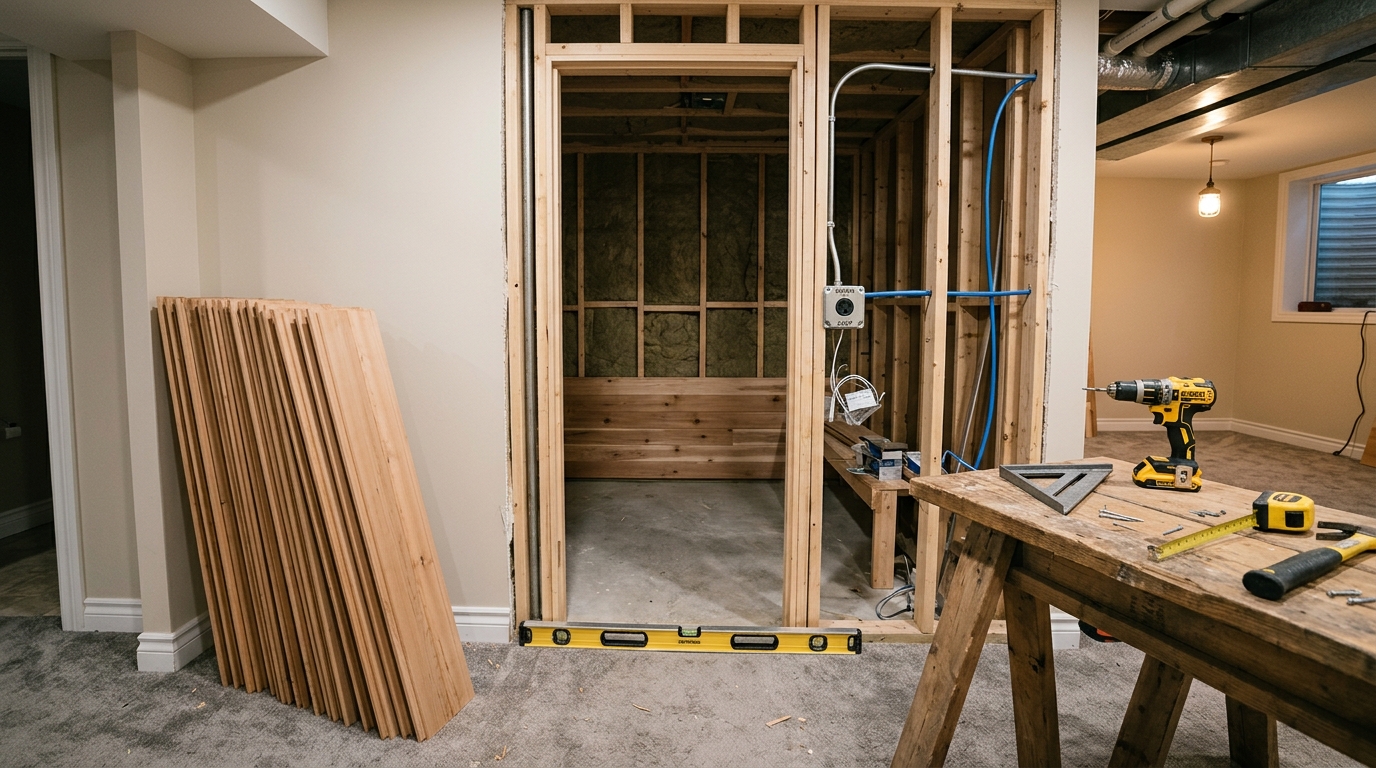
A home sauna install spans a huge difficulty range — from “plug in the infrared cabin and you’re done” (5 minutes) to “frame a dedicated room, run a 240V circuit, install ventilation, build the bench system” (full weekend project, $1,500-4,000 in materials beyond the heater). Most cabin and barrel saunas land somewhere in between: a kit that ships pre-cut, 6-12 hours of assembly with two people, and one electrician visit for the 240V hookup. This guide walks the full range so you can budget time, money, and skill correctly.
Install difficulty by sauna type
| Product | Best for | Rating | Notes | |
|---|---|---|---|---|
| Infrared cabin (1-3 person, 110V) | true plug-and-play — no install | ★★★★★ | 60-90 min assembly. Tools: included Allen key only. | — |
| Infrared cabin (3-4 person, 240V) | cabin assembly + electrician visit | ★★★★★ | 90-120 min assembly. $300-700 electrician. | — |
| Pre-cut cabin sauna kit (Dundalk, Almost Heaven) | DIY kit + electrician | ★★★★★ | 6-12 hr assembly (2 people). $400-1,200 electrician. | — |
| Barrel sauna kit | DIY kit + electrician + pad | ★★★★☆ | 6-10 hr assembly. Pad prep adds 4-8 hrs. | — |
| Custom-built indoor sauna room | permanent install in dedicated room | ★★★★☆ | Full weekend project minimum. | — |
| Outdoor barrel + wood-fired | no electrician; stovepipe install | ★★★★☆ | Stovepipe + spark arrestor. Code varies. | — |
The plug-in path: infrared 1-3 person
This is the lowest-friction sauna install. The full process:
- Unbox the kit (15 minutes; verify all panels and parts present)
- Position in your chosen room (110V outlet within 6 feet)
- Assemble following the included instructions — panels lock with cam-locks or simple screw connectors (45-75 minutes for one person, 30-45 with two)
- Plug in and run a 30-minute heat-up cycle to burn off any manufacturing residue
That’s it. No electrician, no permit, no framing.
The catch: this only works for 1-3 person infrared cabins that draw under 1,800 watts on 110V. For larger infrared cabins (3-4 person) or any traditional/barrel sauna, you need a 240V circuit.
The 240V electrical install
Any heater above 4.5kW needs a dedicated 240V circuit. This is the most common professional-help item in sauna installs. Three options:
Option A: Hire an electrician
$400-1,200 depending on:
- Distance from your electrical panel to the sauna location (longer runs = more wire = more cost)
- Whether your panel has room for a new breaker (a full panel needs a subpanel — adds $300-600)
- Local code requirements (some areas require permits; some require inspections)
This is the right path for 80% of sauna owners. The electrician handles the breaker, conduit, outlet (or hardwired connection), and grounding. Plan one half-day visit; most done in 3-5 hours.
Option B: DIY (where code allows)
Some U.S. states and municipalities allow homeowner DIY electrical work for residential dedicated circuits. Where allowed, a sauna 240V install runs roughly $150-400 in materials:
- 40-50 ft of 6/3 NM-B cable (rated for 50A circuits): $60-120
- 40A or 50A double-pole breaker: $15-30
- Electrical box + 240V outlet (NEMA 14-30) or hardwired junction: $15-40
- Conduit + clamps (if running through walls/ceilings): $30-100
- Permit + inspection fees: $50-200
Required skills: identifying your panel’s spare capacity, pulling cable through walls or conduit, terminating the breaker, and testing the circuit. If you’ve installed a dryer outlet before, you can install a sauna circuit. If not, hire someone — DIY electrical mistakes can cause fires or trip inspections on home sales.
Option C: Choose a 110V sauna (skip the electrical work)
Most 1-3 person infrared cabins run on standard 110V. If you don’t want electrical work, this is the path. Trade-off: you can’t run a traditional sauna at home.
Ventilation
Saunas need airflow:
- Inlet vent: low on the wall (4-12 inches off the floor), positioned near the heater. Brings cool air in to replace what escapes through the upper vent.
- Outlet vent: high on the opposite wall (within 12 inches of the ceiling). Hot stale air rises and exits here.
Pre-built cabin and barrel kits include vents in the right positions. For custom-built saunas, plan for two 4×8 inch louvered vents on opposite walls. The inlet should have an adjustable louver so you can throttle airflow.
Note: most outdoor saunas don’t need mechanical ventilation. The temperature gradient between inside and outside drives natural convection through the vents. Indoor saunas in basements or sealed rooms may need a small exhaust fan vented to the outside — check the cabin manufacturer’s recommendations.
Foundation and floor prep
For indoor installs:
- Existing concrete floor: ideal. Add a moisture barrier (10-mil plastic sheeting) under the sauna footprint.
- Existing wood subfloor: works if the joists support 150+ lb/sqft (most do). Add 1/2 inch plywood underlayment + moisture barrier.
- Bathroom tile: works; no underlayment needed.
- Carpet: remove carpet under the sauna footprint. Don’t install a sauna on carpet.
For outdoor installs:
- Concrete slab (4-6 inch thickness): best for permanent saunas. $400-1,200 to pour.
- Gravel + paver pad: DIY option. $200-500. Compact 3-4 inches of gravel, lay 24×24 inch pavers.
- Existing patio/deck: only if rated for 200+ lb/sqft loaded; verify load rating before placing.
Assembly time by sauna type
| Type | Assembly time | People needed |
|---|---|---|
| 1-2 person infrared cabin | 30-90 min | 1-2 |
| 3-4 person infrared cabin | 90-150 min | 2 |
| 4-person barrel sauna | 6-8 hrs | 2 |
| 6-person barrel sauna | 8-10 hrs | 2 |
| 4-person cabin sauna kit | 6-8 hrs | 2 |
| 6-person cabin sauna kit | 8-12 hrs | 2 |
| 8-person cabin sauna kit | 12-16 hrs | 2-3 |
| Custom-built indoor sauna | 24-40 hrs | 2 + contractor for electrical |
Most owners over-estimate their assembly speed. Plan for the higher end of the range, add 2-3 hours for the “huh, this doesn’t fit quite right” moments, and don’t try to finish in one session.
Tools you’ll need (cabin/barrel kits)
The standard kit beyond what comes in the box:
- Drill with hex/Allen bits (most kits ship the bits but not the drill)
- Tape measure (24 ft minimum for larger saunas)
- Spirit level (4-foot)
- Rubber mallet (for tapping panels into place)
- Sawhorses or a clear floor space ~12×8 ft for laying out parts
- Step ladder (6 ft for cabin tops, 4 ft for barrel tops)
- Safety glasses, gloves, and ear protection for drilling
What to hire out
For most home sauna installs, three things justify hiring:
- 240V electrical circuit ($400-1,200) — unless you’re confident with electrical and your code allows DIY
- Concrete pad for outdoor saunas ($400-1,200) — DIY is possible but a poured pad lasts 30+ years and an uneven DIY pad causes problems for the life of the sauna
- Custom-built indoor sauna room ($3,000-15,000 in labor) — framing, vapor barrier, ventilation, electrical, finish: too many trades for one DIY project unless you have construction experience
What you can usually do yourself:
- Kit assembly (cabin and barrel kits are designed for DIY)
- Foundation prep (gravel + paver pads)
- Routing cable through finished walls (if comfortable with drywall patches)
- Heater installation (mounting to the wall + connecting to the circuit)
FAQ
Frequently asked questions
How long does a full sauna install take?
Do I need a permit?
Can I install a sauna in my bathroom?
What's the best room in the house for an indoor sauna?
Do I need ventilation if I install indoors?
Can I install a sauna myself if I've never done electrical work?
Bottom line
For most home sauna buyers: pre-cut cabin or barrel kit + hire-out the 240V electrical = realistic DIY path. Plan a weekend for assembly + a half-day for the electrician. Total install cost beyond the cabin: $400-1,500.
For lowest friction: infrared 1-3 person cabin (110V, plug-and-play). No install required.
For maximum quality: custom-built indoor sauna with proper framing, vapor barrier, ventilation, and finished interior — $3,000-15,000 in trades on top of materials. Worth it only for permanent dedicated installs where the sauna is a major lifestyle investment.
Pair with the right cost guide, accessories, and pick the right setup overall.