guides
How to Make Your Sauna Smell Better
Eliminate bad sauna odors with targeted cleaning, proper ventilation, and safe aromatic products. Keep your home sauna smelling fresh year-round.
 Marcus Reade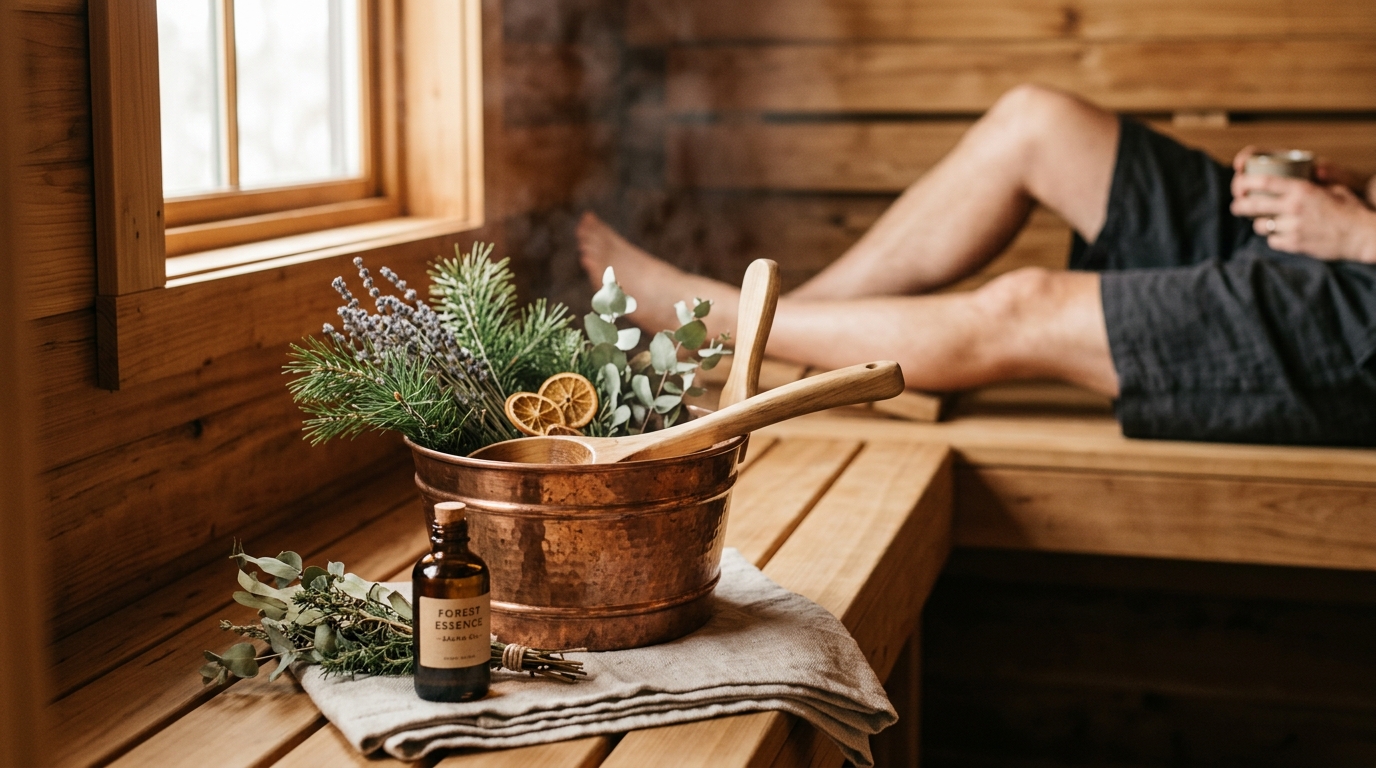
A sauna that smells musty, sour, or chemical is almost always suffering from one of three problems: sweat buildup in the bench wood, inadequate airflow between sessions, or a cleaning product leaving residue that off-gasses at high heat. Fix the source — deep-clean the benches and walls, correct the ventilation, and switch to sauna-safe aromatic products — and the unpleasant odor disappears within one or two sessions.
What causes bad sauna smells?
Understanding the source of the odor tells you exactly which fix to apply. The most common causes fall into four distinct categories.
Sweat absorbed into wood. During each session, body oils and sweat soak into the bench and wall surfaces. When they oxidize inside the wood grain across multiple sessions, they produce the sour or musty smell most people associate with a neglected sauna. This is the most common cause — and when it advances to the black-staining stage, only sanding removes it.
Poor ventilation between sessions. A sauna that stays closed after use traps warm, humid air inside. That humidity promotes mold and mildew growth in the corners, bench joints, and the underside of the upper bench — areas that receive the most sweat drip but the least cleaning attention. Mold produces an earthy, damp smell distinctly different from the sour sweat odor.
Residue from cleaning products. Many household cleaners that seem appropriate — pine oil products, multi-surface sprays, strongly fragranced wood cleaners — leave chemical residues in sauna wood. At room temperature these residues are largely inert. At sauna temperatures of 170–195°F, they vaporize and produce harsh, unpleasant odors often mistaken for the smell of burning wood or scorched material.
Water quality and minerals. In areas with hard water or water that carries a detectable odor, the steam produced during löyly (the practice of pouring water on the stones) carries that smell directly into the air. Switching to filtered water for the bucket eliminates this source immediately and at zero cost.
Step-by-step: how to deodorize a smelly sauna
Step 1: Run an empty diagnostic heat cycle
Before cleaning, heat the sauna to its normal operating temperature with nobody inside and the door cracked open several inches. Notice exactly what the smell is like — sour and sweaty, earthy and moldy, or sharp and chemical. The smell character at operating temperature identifies the primary source and tells you where to focus your cleaning effort.
Step 2: Deep-clean all wood surfaces
-
Mix a sauna-safe cleaning solution. Use a few drops of mild, unscented dish soap in a bucket of warm water, or a commercial cleaner labeled specifically sauna-safe. Do not use pine oil cleaners (Murphy Oil Soap, Pine-Sol), bleach, ammonia-based products, or any cleaner with added fragrances or essential oil blends. These off-gas harmfully at sauna temperatures and will make the smell problem worse, not better.
-
Scrub the benches thoroughly. Use a soft-bristle brush and scrub along the wood grain rather than across it. Cover the full seat surface, backrests, and critically, the underside of the upper bench — a zone that receives dripping sweat during every session and is almost never cleaned by casual users. Pay extra attention to the junction where the bench meets the wall or floor; these joints trap sweat and moisture between surfaces.
-
Clean the walls and ceiling. Wall boards near the back wall and the lower section of wall behind the benches receive splashed sweat during sessions. Wipe them down with the same cleaning solution. The ceiling and the area immediately above the heater often collect mineral deposits and occasional soot — wipe these with a damp cloth.
-
Scrub the floor. Sweat drips onto the floor throughout every session. Scrub the entire floor surface, with extra attention to the corners and the zone directly below the benches. If your sauna has a wooden floor grate, remove it and scrub both the grate and the floor beneath it separately.
-
Rinse every surface with plain water. After scrubbing, go back over all surfaces with a cloth or brush dampened with clean, plain water. Soap residue left in the wood produces a soapy steam smell during your next session and extends the odor problem rather than solving it.
-
Air dry completely. Leave the door fully open for at least two hours. Open the intake vent if your sauna has one. Position a fan at the doorway to move fresh air through if you want to accelerate drying. Do not run the heater until the wood feels dry to the touch.
Best for deep-cleaning cedar and pine sauna surfaces without leaving residue that off-gasses at high heat
Sauna-Safe Natural Wood Cleaner
A plant-based sauna cleaner formulated specifically for high-temperature wood environments does the deodorizing work without creating a secondary smell problem. Look for a product with no added fragrances, no pine oil, and no alcohol-based solvents — the label should say sauna-safe explicitly. One 16-32 oz bottle handles several full cleaning cycles in a standard 4-person sauna. Budget $18-32 for a quality product that rinses completely clean.
★★★★★ 4.6 · 1,480 reviews
Check current price on Amazon→Step 3: Sand any deeply stained or musty bench boards
If bench boards have dark gray or black staining concentrated in the high-contact zones — the rear seat surface, the center of the backrest — the odor-causing oxidized sweat has penetrated below the level that cleaning can reach. Chemical cleaners will not help at this stage regardless of concentration or product.
- Sand the affected area with 60-grit sandpaper using a firm sanding block, working along the wood grain. Sand until fresh, light-colored wood appears beneath the discoloration.
- Follow with 80-grit to smooth the surface so it is comfortable against bare skin without becoming so fine that the wood turns overly absorbent.
- Vacuum all dust thoroughly, including from the floor and heater area, before running the sauna again.
- Leave the wood completely bare after sanding. Do not apply any coating, oil, stain, or treatment to freshly sanded sauna wood — bare cedar is the correct finish for sauna interiors, and any coating reintroduces an off-gas source.
Run one empty heat cycle after sanding before using the sauna normally, to drive any remaining fine wood dust out of the space.
Step 4: Fix the post-session ventilation routine
Poor ventilation after sessions allows odors to develop even when cleaning is consistent. The correct routine takes five minutes and prevents most odor and mold problems from developing in the first place.
- Turn the heater off immediately when your last session ends.
- Prop the door fully open — not cracked, fully open — for at least 30 minutes. If your sauna has a fresh-air intake vent, open it fully as well.
- Remove every towel, headrest, and accessory from the sauna interior. Damp towels left draped on benches overnight create localized zones of sustained moisture against the wood surface and are the single most common cause of bench mold in home saunas.
- Leave the door open until the sauna has fully cooled to room temperature.
If your sauna does not have adequate cross-ventilation — a fresh-air intake near the floor and an exhaust opening near the ceiling — the interior will never fully dry between sessions regardless of how long the door stays open. A sauna ventilation fan that runs for 20–30 minutes after each session actively moves air through the space and significantly reduces both odor development and long-term wood damage from retained moisture.
Best for saunas with poor natural airflow between sessions where door-open ventilation alone does not fully dry the interior
Sauna Ventilation Fan for Post-Session Drying
A compact exhaust fan rated for sauna temperatures draws humid air out actively rather than waiting for passive air exchange. Models designed for sauna use handle sustained high heat without warping or off-gassing compounds into the sauna air — unlike standard bathroom fans not rated for this environment. Run it for 20-30 minutes after each session with the fresh-air vent open to create complete air exchange through the sauna. Budget $45-90 for a properly rated fan.
★★★★★ 4.5 · 890 reviews
Check current price on Amazon→How to add a pleasant scent to your sauna
Once the source of bad odors is eliminated, many sauna users want to add a positive aromatic element. Sauna aromatics are a traditional part of Finnish and Nordic sauna culture — the key is using them correctly so they enhance the experience rather than creating a new residue problem.
Sauna essential oils in the water bucket. The correct method is to add 5–10 drops of a sauna-specific essential oil to the bucket of water used for löyly — the ritual of pouring water on the heater stones. The steam carries a light, clean scent into the air. Popular and traditionally appropriate options include eucalyptus, birch tar, pine tar, and cedar. Never pour essential oils directly on the heater stones — the concentrated oil burns onto the stone surface and creates a scorched, acrid smell that is very difficult to remove even with sustained cleaning.
Birch whisks. A traditional birch whisk (vihta or vasta), soaked in water before a session and used to lightly brush or beat the skin while in the sauna, releases a clean, fresh birch aroma as the leaves contact the heated air. The scent is subtle but distinctly pleasant and widely considered the gold standard of natural sauna fragrance in Finnish sauna tradition.
Cedar chips and dried herb sachets. Small sachets of dried cedar chips, eucalyptus leaves, or birch leaves hung near the sauna vent produce a light ambient scent. They are effective when fresh but lose potency within a few weeks in a regularly heated sauna and need periodic replacement to remain noticeable.
What to avoid entirely. Do not use scented candles, plug-in air fresheners, or spray air fresheners inside a sauna. These products are not formulated for the high-temperature, high-humidity sauna environment and leave residues that produce unpleasant odors when heated repeatedly. Avoid essential oils labeled for massage or diffuser use that contain carrier oils — the carrier oil soaks into the bench wood and eventually goes rancid, creating a persistent new odor problem that requires sanding to resolve.
Best for adding traditional sauna scent to water-bucket steam without leaving residue on bench surfaces or heater stones
Sauna Essential Oil Set for Löyly
A set of sauna-specific essential oils in eucalyptus, birch, pine, and cedar covers the classic aroma options used in Nordic sauna culture. Add 5-10 drops to the water bucket before each pour — not to the stones directly. Properly diluted in steam, the scent is clean and light, not overwhelming. Look for sauna-formulated oils with no added carrier oils or synthetic fragrance compounds. Budget $22-40 for a multi-bottle starter set.
★★★★★ 4.7 · 2,630 reviews
Check current price on Amazon→How to keep your sauna smelling fresh long-term
Eliminating the odor once is the easy part; keeping it from returning requires three consistent habits that take under 10 minutes total per session.
Use a towel as a bench barrier every session. Sitting on a clean dry towel during each session dramatically reduces direct sweat contact with the bench surface. Finnish sauna tradition uses a simple linen or cotton towel folded once and placed where you sit and where your back rests against the backrest. This single habit is more effective at preventing sweat-stained, odorous bench wood than any cleaning product on the market.
Wipe and ventilate after every session. A 5-minute dry wipe of the bench surfaces followed by 30 minutes of fully-open-door ventilation after each session removes fresh sweat before it soaks into the grain and allows residual moisture to escape. Most sauna odor problems develop in saunas where both of these steps are skipped or shortened because they seem minor.
Scrub weekly with a sauna-safe cleaner. A 15-minute weekly scrub with a sauna-safe cleaner and a soft brush removes the body oil residue that accumulates in the grain between sessions. At the weekly stage this residue is still on or just below the wood surface and wipes away cleanly. Allow it to accumulate for months and it oxidizes into the wood fiber where only sanding can remove it.
| Product | Best for | Rating | Notes | |
|---|---|---|---|---|
| Post-session wipe and ventilate | daily odor prevention | ★★★★★ | Dry-wipe bench surfaces and prop door fully open 30 min after every session. Prevents sweat from soaking into wood. | — |
| Weekly sauna-safe scrub | removing oil buildup before it oxidizes | ★★★★★ | Sauna-safe cleaner, soft brush, plain water rinse. About 15-20 minutes. Stops staining at the preventable stage. | — |
| Sanding discolored bench boards | removing deep oxidized sweat that cleaning cannot fix | ★★★★★ | 60-grit then 80-grit along the grain. Needed once or twice per year in a heavily used home sauna. | — |
| Essential oils in water bucket | adding pleasant traditional sauna scent | ★★★★★ | 5-10 drops per water-bucket pour. Never applied directly to heater stones — this scorches the oil and makes the smell worse. | — |
FAQ
Frequently asked questions
Why does my sauna smell like sweat?
Why does my sauna smell chemical or like burning plastic?
Is it safe to put essential oils directly on sauna heater stones?
How do you get rid of mold smell in a sauna?
What is the traditional Finnish way to add scent to a sauna?
Bottom line
A smelly sauna almost always traces back to sweat absorbed in the bench wood, inadequate post-session ventilation, or a cleaning product leaving residue that off-gasses at high heat. Address all three: deep-clean the benches with a sauna-safe product, sand any boards with deep oxidized staining, and commit to the dry-wipe-and-ventilate routine after every session. Once the odors are gone, add traditional aromatic oils to the water bucket and use a towel barrier during sessions to slow down bench absorption. A well-maintained sauna should smell like warm cedar — nothing else.
For more on keeping your sauna in top shape, read our guides on how to clean sauna benches, how to maintain a sauna, and how to improve sauna airflow. For aromatic products and accessories, see our picks for best sauna essential oils and best sauna accessories.