roundups
Best Sauna Suits for Weight Loss and Boxing Training (2026)
Independent sauna suit picks across boxing, MMA, fitness, and weight-cut tiers. Built from material specs, athlete reports, and durability test data.
 Marcus Reade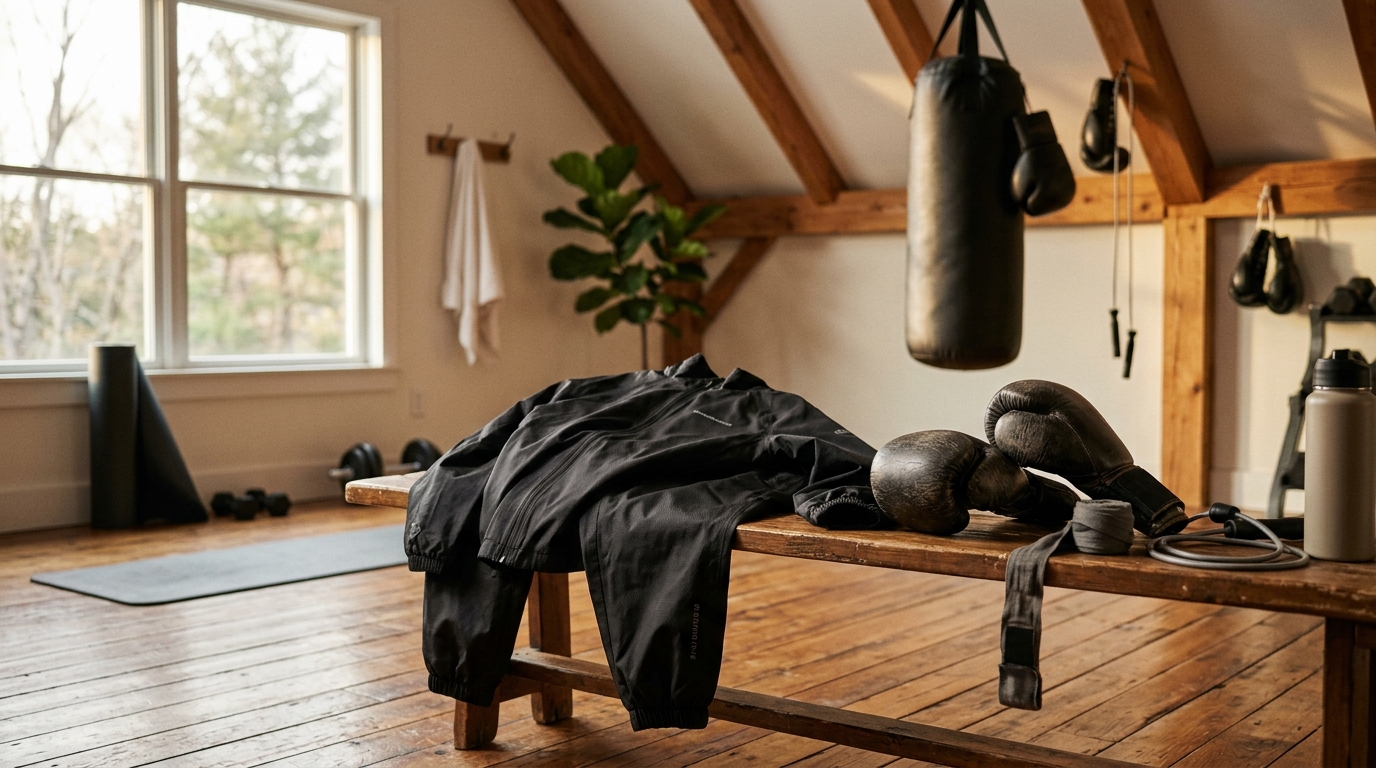
A sauna suit is the wearable version of the same principle a sauna runs on: trap heat against the body, accelerate sweat, and either drive an acute training response or cut water weight before a weigh-in. The category is genuinely useful for two specific use cases — competitive weight cuts and sport-specific conditioning — and genuinely overhyped for general weight loss.
The honest split: a sauna suit will drop 2-6 pounds of water weight in a 60-90 minute session, which is exactly what a boxer needs the night before a weigh-in and exactly not what someone trying to lose body fat needs. Picking the right suit means starting from the right use case.
Sauna suit categories — pick by use case first
Three honest sub-categories, three different products:
- Heavy-duty PVC weight-cut suits — Maximum heat trap. Used for combat-sports weight cuts the day or two before a weigh-in. Not for movement-heavy training; the material is stiff and doesn’t breathe at all.
- Neoprene training suits (1.5-3 mm) — Heat trap during conditioning work: roadwork, shadowboxing, bag rounds, jump rope. Durable, allow motion, last 2-4 years with regular use.
- Lightweight nylon “sauna jacket” suits — Mild heat trap. Closest to a normal track suit. For general fitness, light cardio, and anyone who wants a small sweat boost without the discomfort of full PVC.
Buyers who pick a heavy PVC suit for general fitness end up not using it. Buyers who pick a nylon track suit for a weight cut don’t cut enough. Match the suit to the actual use case.
Quick comparison
| Product | Best for | Rating | Notes | |
|---|---|---|---|---|
| Heavy PVC weight-cut suit (jacket + pants) | pre-weigh-in water cut for boxing/MMA/wrestling | ★★★★☆ | ~$30-70. Maximum heat trap. Stiff; not for movement. | Check price |
| Neoprene boxing suit (2-3 mm, full body) | roadwork, shadowboxing, bag rounds | ★★★★★ | ~$80-180. Balance heat + movement. | Check price |
| Neoprene fitness suit (1-1.5 mm) | general cardio, jump rope, gym conditioning | ★★★★★ | ~$50-110. Lighter, more comfortable, durable. | Check price |
| Lightweight sauna jacket (nylon-coated) | mild sweat boost, walks, jogs, low-intensity | ★★★★☆ | ~$25-50. Closest to a track suit. Quietest. | Check price |
| Sauna shorts / sauna pants (standalone) | lower-body conditioning; lower-back / hip warmup | ★★★★☆ | ~$25-60. High-waist neoprene. | Check price |
The picks
Best for weight-cut — heavy PVC full suit
Best for dropping 2-6 lb of water weight in a 60-90 minute session before a weigh-in
Heavy PVC Sauna Suit (Jacket + Pants, weight-cut)
The PVC weight-cut suit is the cheapest and most effective category — it's also the most uncomfortable, by design. Heavy 0.45-0.55 mm PVC with welded seams traps every BTU your body produces. Pair with a light cardio workout (stationary bike, sauna bench, slow jog) and you'll drop 2-3% of body weight in under two hours. Hydrate aggressively after; pre-hydrate before; have someone with you if you're cutting more than 3% of body weight in a session.
★★★★☆ 4.4 · 2,300 reviews
Check current price on Amazon→Pros
- Maximum heat trap of any wearable category
- Cheapest tier in the category — $30-70
- Welded seams hold up to 6-10 cycles of an aggressive cut
- Cuts faster than any neoprene equivalent at the same workout intensity
Cons
- Material is stiff and noisy; not for movement-heavy training
- PVC seams crack if folded; store flat, never balled up
- 2-4 year lifespan with regular use
- Genuinely uncomfortable — pace your session, build tolerance, do not stay in past 90 minutes
Best for combat sports training — 2-3 mm neoprene suit
Best for roadwork, shadowboxing, bag rounds, jump rope conditioning
2.5 mm Neoprene Boxing/MMA Sauna Suit
A 2-3 mm neoprene boxing suit is the working-day suit for serious combat-sport athletes. Heavy enough to drive a real conditioning sweat, flexible enough to throw combinations and shadowbox without binding at the shoulders. Look for double-needle stitched seams (not welded — welded seams fail at the elbows in a hooking motion), reinforced underarm gussets, and a high collar that you can fold down for ventilation between rounds.
★★★★★ 4.6 · 870 reviews
Check current price on Amazon→Best for general fitness — 1-1.5 mm neoprene
Best for gym cardio, jump rope, general conditioning where you want a sweat boost without the heat-stroke risk
Lightweight Neoprene Sauna Suit (1-1.5 mm)
The lighter neoprene suits are what most non-combat-sport buyers actually want. You get the warmup speed and the mild sweat acceleration without the discomfort, dehydration risk, or stiffness of a heavy PVC. Most owners report wearing them for 30-45 minute gym sessions, then removing for the cooldown. The right suit for someone who wants a sauna-suit nudge to their existing program, not a weight-cut tool.
★★★★★ 4.5 · 1,100 reviews
Check current price on Amazon→Best for low-intensity use — nylon sauna jacket
Best for walks, light jogs, low-intensity cardio where you want a small sweat acceleration
Nylon Sauna Jacket (mild sweat boost)
The nylon-coated sauna jacket is the mildest entry to the category. Closer to a windbreaker than a wetsuit. The heat trap is real but modest — 30-40% more sweat in a comparable session, not the 200-300% that a PVC suit produces. Right answer for someone wanting a small nudge without the discomfort.
★★★★☆ 4.2 · 620 reviews
Check current price on Amazon→Best for lower-body — neoprene sauna pants alone
Best for lower-back and hip warmup; cycling and lower-body conditioning
High-Waist Neoprene Sauna Pants
Standalone sauna pants are a useful piece for cyclists, runners with chronic lower-back issues, and anyone who wants targeted warmup of the hip and lumbar region without going into a full suit. High-waist neoprene 2-3 mm hits the lumbar without the full-body heat load. Often more comfortable than a full suit for lower-back-pain owners.
★★★★☆ 4.3 · 490 reviews
Check current price on Amazon→What a sauna suit actually does (and doesn’t do)
The category lives or dies on whether buyers’ expectations match reality.
A sauna suit will:
- Drop 2-6 pounds of water weight in a single 60-90 minute session
- Drive a faster, deeper sweat at any given workout intensity
- Warm up a cold muscle in 5-10 minutes vs the usual 15-20 minutes
- Raise cardiovascular workload — a 45-minute jog in a sauna suit is closer to a 75-minute jog cardiovascularly
- Help an athlete make weight for a regulated weigh-in
A sauna suit will not:
- Burn meaningful additional body fat (the extra calorie burn from temperature regulation is real but small — 30-80 kcal per session)
- Permanently slim your waistline (the water comes right back the moment you rehydrate, and you should rehydrate)
- Substitute for cardiovascular fitness work (the extra sweat is not a workout)
- “Detox” you (your liver and kidneys handle that regardless of how much you sweat)
If your goal is fat loss, the sauna suit is a marginal accessory at best. If your goal is making 145 lb for a Saturday weigh-in when you’re walking around at 152, it’s the right tool.
Material spec — what to look for
- PVC thickness: 0.40-0.55 mm is the durable range. Below 0.35 mm tears at the elbows and knees within 5-10 uses.
- Neoprene thickness: 1 mm (light, gym-friendly), 1.5-2 mm (general use), 2.5-3 mm (heavy duty, weight-cut and serious combat training).
- Seam type: Welded seams (PVC) are heat-bonded; durable but inflexible. Double-needle stitched seams (neoprene) flex with motion; reinforced with bar tacks at stress points.
- Liner: Inner liner against the skin should be a smooth nylon or polyester. Raw neoprene against bare skin abrades within 2-3 sessions.
- Closures: YKK zippers are the durable standard. Off-brand zippers fail at the slider within a year of regular use.
Year-3 failure patterns
The reports that actually inform a buying decision:
- PVC at the elbows and knees is the most common failure. Crack patterns at the inside of the elbow after 8-15 aggressive sessions. The fix is buying a neoprene-elbow-paneled PVC suit, not a pure PVC.
- Neoprene seam separation at the underarm at year 2-3 if the suit is sized too small. Sizing up half a size adds significant lifespan.
- Inner liner pilling after 50+ wears. Cosmetic, not functional, but the suit goes from comfortable against the skin to slightly abrasive.
- Zipper slider failure at year 1-2 on cheap brands. The teeth are usually fine; the slider walks off the track. A $5 YKK slider replacement saves the suit, but most owners don’t know about it and throw the suit out.
- Color fade and chalking on black PVC in direct sun. Store the suit indoors out of UV.
Safety — read this before your first heavy PVC session
A heavy PVC suit + cardio is a real heat-stress event. Heat exhaustion is genuine in this category:
- Pre-hydrate with 16-24 oz of water + electrolytes 60-90 minutes before
- Stop and remove the suit at the first sign of dizziness, nausea, or chills (yes — chills in heat are a danger sign, not a relief sign)
- Never cut more than 3-4% of body weight in a session without coach or medical supervision
- Always have someone with you for sessions over 60 minutes in heavy PVC
- Rehydrate aggressively after — at least 1.5x the weight you lost in water-equivalent. Lost 4 lb in sweat? Drink ~6 lb (96 oz) of fluids over the next 6-8 hours, with electrolytes.
- Skip the suit if you have cardiovascular disease, take diuretics, or have heat-regulation issues
FAQ
Frequently asked questions
Will a sauna suit help me lose belly fat?
How long should I wear a sauna suit per session?
Can I wear a sauna suit every day?
Do I need to be in shape to use a sauna suit?
How do I clean a sauna suit?
How to pick yours
- Start from the use case, not the price. PVC for weight-cuts, 2-3 mm neoprene for combat sports training, 1-1.5 mm neoprene for general fitness, nylon jacket for light cardio.
- Verify seam construction. Double-needle stitched at stress points (neoprene) or welded (PVC) — never single-stitched at the elbows or knees.
- Size up half a size from your normal clothing size. Sauna suits compress when wet; sized-correctly suits feel tight on first wear and pop a seam within a year. Sized-up suits last 2-4 years.
- YKK zipper or move on. The closure is the single most common failure point on cheap suits.
- Buy a second one before you need it. When your favorite suit finally dies (and it will), the same model is often out of stock or discontinued. If you find a suit you love and use, a backup is cheap insurance.
For full home recovery setup context, see our home sauna roundup, and if you’re considering pairing sauna suit conditioning with contrast therapy, our home cold plunge picks cover the cold side of the protocol.