roundups
Best Far Infrared Saunas 2026 — FIR Cabins for Deep Heat at Home
Our top far infrared sauna picks for 2026: 1- and 2-person FIR cabins ranked by heater quality, EMF rating, wood type, and value.
 Marcus Reade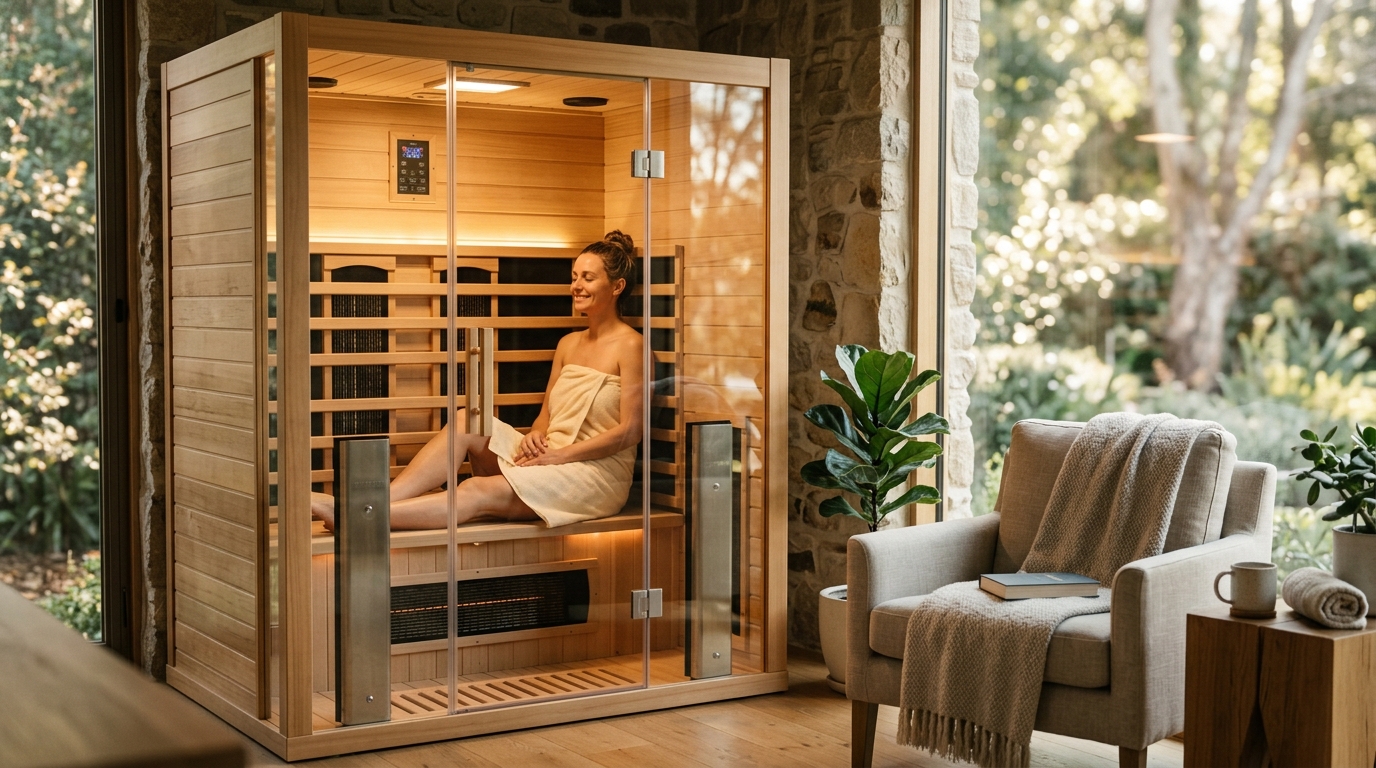
The vast majority of home infrared saunas on the market are far infrared (FIR) saunas, and that’s not an accident. Far infrared wavelengths — roughly 6–15 microns — match the range that human tissue absorbs most efficiently, producing deep warmth at cabin temperatures of 120–155°F that feels different from sitting in a hot room. Traditional steam saunas heat the air; FIR saunas heat you directly. The result is a sweat most users find more comfortable, faster to achieve, and less demanding of cardiovascular tolerance than a conventional 190°F Finnish session.
The problem with shopping this category is that most products use the same marketing language regardless of actual heater quality. “Carbon heating panels” and “low-EMF” appear on $400 budget units and $4,000 premium cabins alike. The real differences — panel surface area, emissivity, carbon grade, EMF certification method, and wood species — require digging to evaluate. This guide identifies the best FIR sauna at each meaningful price point, from plug-in entry models to the brands with years of verified long-term durability data behind them.
How far infrared heaters actually differ
Every FIR cabin uses carbon or ceramic heating elements to emit long-wave infrared radiation. The differences that matter in practice come down to four variables:
Carbon vs. ceramic elements. Carbon fiber flat panels are the current quality standard. They distribute heat across a large surface area, run at lower element temperatures than ceramic rods, and produce a broader, more even far-infrared emission. Ceramic rod heaters concentrate heat in a smaller area, run hotter on the element surface, and have a shorter service life. Budget cabins under $500 sometimes still use ceramic rods — worth confirming in the specs before purchasing.
Panel placement and coverage. Good FIR cabins place carbon panels at the back wall, both side walls, and below-bench foot level — surrounding the occupant with radiant output from multiple directions. Ceiling-mounted or single-wall panels are cost cuts that reduce effective radiant dose significantly. A diagram showing panel placement should appear in the listing; back + side + foot configurations produce a noticeably different session than back-only designs at the same wattage.
EMF output. Carbon panels generate electromagnetic fields during operation. Most brands describe their panels as “low-EMF” — but that claim is self-certified in budget and mid-range products. The two brands with independently verified, third-party-tested low-EMF specifications are Clearlight and Sunlighten. For daily long-term users, the distinction is worth the premium. For occasional use, self-reported low-EMF is an acceptable baseline.
Wood species. Canadian hemlock is the most thermally stable at FIR cabin temperatures, resisting warping and discoloration through years of daily heat cycling. Western Red Cedar performs comparably and adds a natural aroma. Basswood appears in budget units and holds up acceptably at low use frequency; at daily use over several years, basswood warps and discolors where hemlock stays true.
Quick comparison
| Product | Best for | Rating | Notes | |
|---|---|---|---|---|
| Radiant Saunas 1-Person Hemlock FIR Sauna | best budget 1-person; hemlock above the price point; plug-in 120V | ★★★★☆ | $400–550. 120V/15A. ~36×36 in. Carbon panels. Canadian hemlock. | Check price |
| Dynamic Saunas Avila 2-Person FIR Sauna | best value 2-person; hemlock; 6-panel surround coverage | ★★★★☆ | $750–950. 120V/15A. ~47×40 in. 6 carbon panels. | Check price |
| JNH Lifestyles Joyous 2-Person FIR Sauna | best mid-range 2-person; no-EMF wiring; wider interior | ★★★★★ | $900–1,200. 120V/20A. ~51×43 in. No-EMF wiring. 7 panels. | Check price |
| Clearlight Sanctuary 1 FIR Sauna | best verified low-EMF 1-person; daily long-term use | ★★★★★ | $3,000–3,800. 120V/20A. ~34×40 in. Third-party EMF tested. | Check price |
| Sunlighten Solo Portable FIR Sauna | best portable; no assembly; apartment or travel use | ★★★★☆ | $1,200–1,600. 120V/15A. Mat + dome. No floor footprint. | Check price |
The picks
Best budget: Radiant Saunas 1-Person Hemlock FIR Sauna
Best for first-time FIR sauna buyers who want a real hemlock cabinet without spending more than the entry price tier
Radiant Saunas 1-Person Canadian Hemlock Far Infrared Sauna
Radiant Saunas uses Canadian hemlock on this entry unit where competitors at the same price use basswood — that material choice gives it a meaningful durability edge for anyone planning regular use. The carbon heating panels cover the back wall and both side walls in a three-panel configuration; heat-up to 130°F takes 12–15 minutes from a cold start. Installation is 120V/15A plug-in with no electrical work required. Interior LED lighting and a radio/Bluetooth speaker are included without upcharge. Controls are a simple digital panel with a 60-minute timer and temperature setting. At $400–550, no single specification is best in class — but hemlock construction plus three-panel heater coverage on plug-in power is the right combination at this price.
★★★★☆ 4.2 · 1,850 reviews
Check current price on Amazon→Pros
- Canadian hemlock construction at a budget price — more stable than basswood under daily heat cycling
- Three-panel carbon layout (back + both sides) provides decent surround coverage for one person
- 120V/15A plug-in power — no electrician or dedicated circuit required
- LED lighting and Bluetooth audio included at no additional cost
Cons
- Single-person only; shoulder width is tight for larger adults
- Carbon panels are a lower specification than mid-tier brands — shorter service life than JNH or Clearlight
- Wall thickness is thinner than mid-range units; heat retention drops when the door opens mid-session
- No app preheat or external scheduling controls
Best value 2-person: Dynamic Saunas Avila FIR Sauna
Best for the best performance-per-dollar for a 2-person FIR cabin with full surround heater coverage
Dynamic Saunas Avila 2-Person Far Infrared Sauna
Dynamic Saunas is the brand that reliably appears on best-value lists in the 2-person FIR category, and the Avila earns that with six carbon panels — back wall, foot level, and side walls — producing even surround coverage for both occupants. Canadian hemlock panels and double-wall floor construction give it better thermal efficiency than single-panel budget units. The digital controller handles temperature up to 140°F on a 60-minute timer; a Bluetooth speaker is built in and functional for daily sessions. Heat-up to 130°F takes 12–15 minutes. Installation is 120V/15A plug-in power with no dedicated circuit needed. At $750–950, it delivers a genuinely satisfying FIR session without committing to a premium budget.
★★★★☆ 4.4 · 2,750 reviews
Check current price on Amazon→Pros
- Six carbon panels cover back, foot, and both sides — full surround coverage for two occupants
- Canadian hemlock holds up through years of daily heat cycling
- 120V/15A plug-in installation — no electrician required
- Heat-up to 130°F in 12–15 minutes; recovers quickly after door is opened
- Bluetooth audio is a practical daily-use feature at this price point
Cons
- Low-EMF spec is self-reported, not independently tested
- Flat-pack assembly takes 2–4 hours; much easier with two people
- 140°F temperature ceiling is lower than some competing units
- Interior bench depth is narrow for longer-limbed occupants
Best mid-range: JNH Lifestyles Joyous 2-Person FIR Sauna
Best for buyers stepping up from budget FIR who want no-EMF wiring, a wider interior, and tighter build tolerances
JNH Lifestyles Joyous 2-Person No-EMF Far Infrared Sauna
JNH Lifestyles positions the Joyous between budget brands and Clearlight-tier premium, and delivers on that with a no-EMF wiring system that cancels the magnetic fields generated by the power leads — separate from the heater panels themselves. Canadian hemlock walls with noticeably tighter panel joinery than Dynamic Saunas, and a wider interior that seats two adults with genuine room, differentiate it from the tier below. Seven carbon panels cover back, both side walls, below-bench positions, and the front foot area — one of the most complete panel layouts in the mid-range. Bluetooth audio, LED mood lighting, and a 60-minute timer are standard. The 120V/20A circuit requirement is the only installation catch; most rooms already have a 20A circuit available, but confirm before ordering.
★★★★★ 4.5 · 1,650 reviews
Check current price on Amazon→Pros
- No-EMF wiring system cancels magnetic fields from power leads — a genuine step up from self-reported low-EMF
- Seven-panel carbon layout with under-bench and front foot coverage is among the most complete in the mid-range
- Wider interior than the Dynamic Saunas tier — two adults fit without contact
- Panel joinery is tighter than budget competition; heat retention is noticeably better
- LED mood lighting and Bluetooth audio included
Cons
- Requires 120V/20A dedicated circuit — most rooms have this, but some older installations do not
- EMF claims are manufacturer-certified rather than independently third-party tested
- $900–1,200 is a meaningful step up from the $750–950 Dynamic Saunas tier
- Assembly takes 2–4 hours and benefits from a second person for panel alignment
Best premium: Clearlight Sanctuary 1 FIR Sauna
Buy direct: Clearlight publishes third-party EMF test results and backs the Sanctuary with a lifetime warranty when you buy direct. Shop Clearlight direct →
Best for daily FIR users who prioritize independently verified low-EMF output, long-term build durability, and a North American warranty
Clearlight Sanctuary 1 Far Infrared Sauna
Clearlight is the brand that dominates serious long-term FIR sauna discussions, and the Sanctuary 1 is their single-person verified system. The distinguishing feature is third-party low-EMF certification: Clearlight publishes measurement methodology and test results — not a self-reported claim. The True Wave II heater produces FIR output across the 4–14 micron range from back, side, and below-bench panel positions. Medical-grade chromotherapy and a built-in audio system are standard. At $3,000–3,800, it's a serious purchase — but Clearlight's multi-year durability record with daily users is verifiable, North American customer service is responsive, and replacement parts are stocked. For daily long-term FIR use, this is the unit to buy once.
★★★★★ 4.7 · 690 reviews
Check current price on Amazon→Pros
- Third-party tested and published low-EMF specs — the only pick in this guide with independently verified EMF data
- True Wave II heater covers the 4–14 micron FIR range with back, side, and below-bench panel positions
- Medical-grade chromotherapy and audio system above the mid-range tier
- North American customer service and stocked replacement parts — meaningful for a 10-year daily use investment
- Multi-year documented durability record from daily long-term users across a decade of sales
Cons
- $3,000–3,800 is 3–4× the mid-range alternatives — a serious commitment
- 1-person interior only; the Sanctuary 2 is required for two occupants at an additional cost
- Primarily sold direct through Clearlight; not reliably stocked on Amazon
- Large packaging requires measuring all doorway clearances before delivery
Best portable: Sunlighten Solo Portable FIR Sauna
Best for apartment dwellers, renters, or anyone who wants genuine FIR output without a fixed floor footprint or assembly
Sunlighten Solo Far Infrared Sauna
Sunlighten builds hospital-grade infrared systems and the Solo is their portable format — a lay-flat carbon panel mat plus a dome cover that encloses the body. It delivers genuine far infrared output at 130–140°F with no assembly, a yoga-mat floor footprint, and 120V/15A plug-in power. Sunlighten's mPulse infrared technology has been used in clinical research settings, which gives the brand an evidence base most competitors don't have. Storage is compact — fold the mat and put it in a closet. At $1,200–1,600, it's priced above a 2-person cabin format in the Dynamic Saunas tier, but it's the right choice for users who cannot or do not want a fixed cabin in their space.
★★★★☆ 4.3 · 870 reviews
Check current price on Amazon→Pros
- No assembly and no fixed floor footprint — stores in a closet, deploys on any flat floor
- Genuine Sunlighten FIR technology with a clinical research backing
- 120V/15A plug-in; compatible with any standard household outlet
- Lay-flat position delivers FIR coverage to back, legs, and sides simultaneously
- The right format for renters and frequent movers where a fixed cabin is not viable
Cons
- Dome format limits the experience: no sitting position, no chromotherapy lighting, no integrated audio
- $1,200–1,600 buys a full 2-person cabin in the Dynamic Saunas tier — a significant format tradeoff
- Head and neck remain outside the dome; some users prefer full-body enclosure
- Not appropriate for anyone who is uncomfortable in a prone enclosed position
What to skip
Ceramic rod FIR heaters. Some budget cabins still use ceramic rod heating elements rather than carbon fiber flat panels. Ceramic rods produce concentrated heat over a small surface area, run at higher element temperatures, and distribute radiant output unevenly. The marketing will still say “far infrared” — confirm the heater type is carbon fiber panel before purchasing. Rod heaters typically appear in the sub-$350 price tier.
Single-wall floor construction. Budget FIR cabins sometimes use single-panel floor construction to reduce cost. The floor is the primary heat loss path in a sauna cabin; a double-wall floor with an air gap or insulation layer measurably improves heat-up time and steady-state temperature maintenance. This specification is buried in technical details — worth checking before ordering.
Budget 4–6 person FIR cabins under $1,000. A “4-person” FIR cabin at $800 is not a 4-person sauna — it’s an undersized heater in an oversized box. FIR heater wattage needs to match cabin volume; a large cabin with an underpowered heater reaches 120°F in 45 minutes and holds temperature poorly. Match claimed wattage to stated cubic footage before purchasing any large-format budget cabin.
FIR saunas with back-wall-only panel placement. A single back-wall panel produces one-directional radiant output — you feel heat on your back. Multi-panel configurations with side and floor coverage surround the body with radiant output from multiple angles, producing a meaningfully different session. Back-wall-only panel layouts are a cost cut that appears frequently in budget cabins and some mid-tier units; always confirm the panel placement diagram before ordering.
FAQ
Frequently asked questions
What is far infrared and how does it differ from near infrared?
What temperature does a far infrared sauna reach?
Do far infrared saunas need a special electrical circuit?
What does low-EMF mean, and does it matter for FIR saunas?
How long does a far infrared sauna session take, start to finish?
What wood is best for a far infrared sauna cabin?
Can I use a far infrared sauna every day?
Bottom line
For most buyers starting with FIR, the Dynamic Saunas Avila is the right pick — Canadian hemlock, six-panel coverage, and 120V plug-in power at an honest $750–950. Buyers who want better EMF management and tighter construction get real value from the JNH Lifestyles Joyous, which adds a no-EMF wiring system and more complete panel coverage for $150–250 more. For daily long-term users who want independently verified low-EMF specs and a decade-long durability record, the Clearlight Sanctuary 1 justifies its premium. And for anyone who can’t commit to a fixed cabin footprint, the Sunlighten Solo delivers genuine FIR technology in a portable format.
For a broader comparison that includes traditional electric and full-spectrum options, see best indoor saunas and best infrared saunas. For a portable FIR option with no cabinet assembly, best infrared sauna blankets covers a related product category at lower price points. For single-occupant dedicated formats, best 1-person saunas has a focused comparison of compact single-user cabins.